
1. Introduction
Heavy-duty cam lock connectors are the gold standard for high-current power distribution in industrial settings. Designed to handle 30A–400A (and higher) electrical loads, these rugged plug-and-socket systems deliver reliable power to heavy machinery, generators, construction equipment, and industrial distribution boxes—environments where standard plugs and sockets fail quickly.
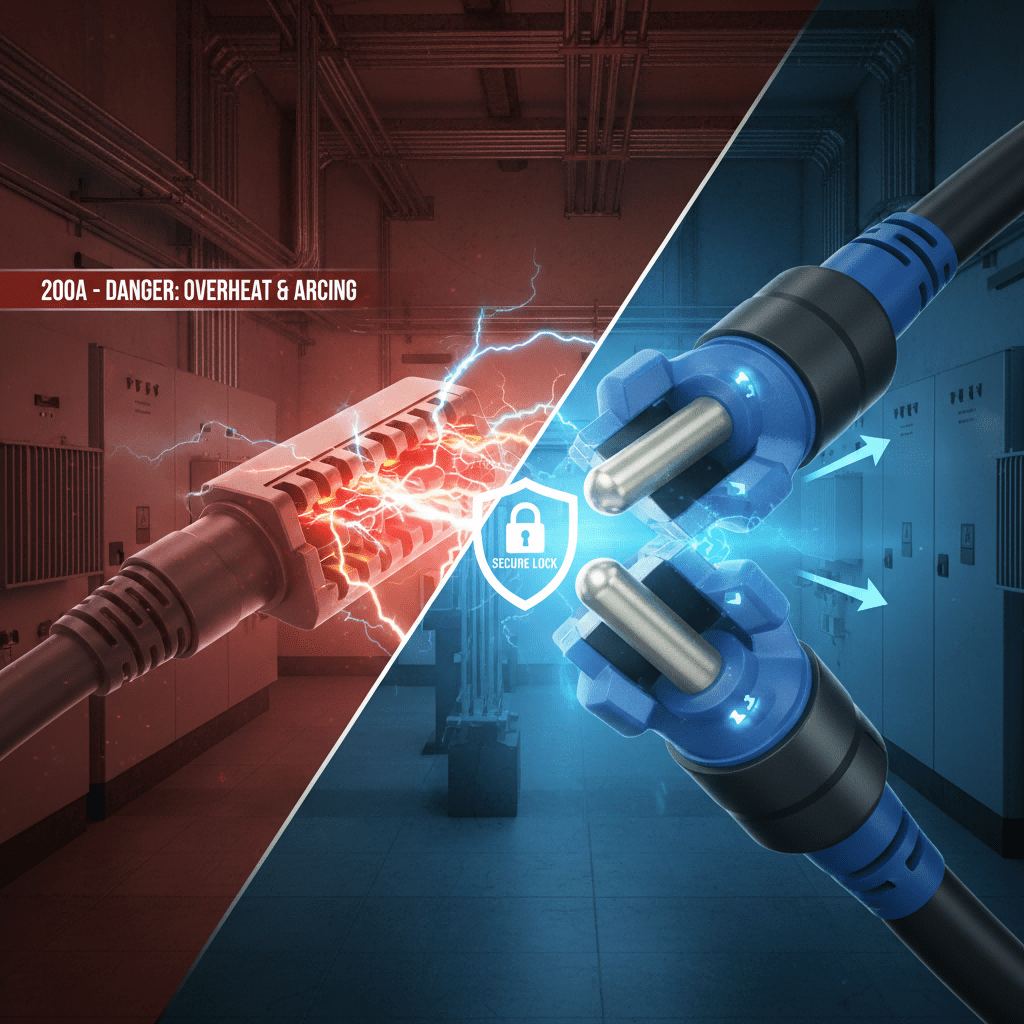
In high-current industrial applications, poor connectivity can have catastrophic consequences: loose cam lock connections cause arcing, overheating, and equipment damage, while incompatible connectors lead to costly downtime. For example, a construction site experienced a $20,000 loss after a low-quality cam lock connector melted during generator operation, halting concrete pouring for 12 hours.
This guide breaks down the critical specifications of heavy-duty cam lock connectors, their high-current industrial applications, top product solutions, step-by-step installation and maintenance processes, and troubleshooting tips. Whether you’re powering a manufacturing plant’s production line or a remote construction site’s generators, this guide ensures you select durable, safe, and compliant cam lock connectors for your high-current needs.
Key terms defined upfront:
- Heavy-Duty Cam Lock Connector: A specialized plug-and-socket system with a cammed locking mechanism, engineered to handle 30A+ high currents in industrial environments.
- Current Rating: The maximum electrical current (amps, A) the connector can safely carry without overheating or arcing (30A–400A for heavy-duty models).
- Pole Configuration: The number of electrical contacts (poles) — 3-pole (three-phase power), 4-pole (three-phase + neutral), 5-pole (three-phase + neutral + ground) are standard for industrial use.
- Locking Mechanism: A cammed design that secures the plug and socket with a twist, preventing accidental disconnection during high-vibration operation.
2. Critical Specifications of Heavy-Duty Cam Lock Connectors
2.1 Current & Voltage Ratings: High-Current Core Performance
Cam lock connectors are optimized for high-power industrial systems, with ratings tailored to heavy-duty equipment demands.
Common Current & Voltage Ratings
- Current Capacity: 30A–60A (light heavy-duty, e.g., portable generators, small pumps); 100A–200A (medium heavy-duty, e.g., manufacturing machinery, construction equipment); 300A–400A+ (extreme heavy-duty, e.g., industrial transformers, large compressors).
- Voltage Compatibility: 240V AC/480V AC (North American three-phase systems); 230V AC/400V AC (European/global three-phase systems); 600V AC max (standard industrial rating for high-voltage applications).
Application Case Study: Current Rating Mismatch Risk
A steel mill used 60A cam lock connectors to power 100A electric arc furnaces. Within days, the connectors’ contacts arced and welded shut, causing the furnaces to malfunction. The mill upgraded to 150A heavy-duty cam lock connectors (ABB Cam Lock Series), which matched the equipment’s current draw and arc suppression needs. After the upgrade, connector failures dropped to zero, and maintenance costs fell by 80%.
2.2 Pole Configuration: Matching Power System Design
Pole count determines compatibility with single-phase or three-phase industrial power systems.
Key Pole Configurations & Uses
- 3-Pole: Three-phase power (no neutral/ground) — used for motors, heaters, and equipment that doesn’t require a neutral wire.
- 4-Pole: Three-phase + neutral — ideal for equipment needing both three-phase power and single-phase auxiliary power (e.g., control panels, mixed-load machinery).
- 5-Pole: Three-phase + neutral + ground — the safest configuration for industrial applications (e.g., construction sites, manufacturing plants), providing dedicated grounding for shock protection.
Application Case Study: Pole Configuration Optimization
A food processing plant initially used 3-pole cam lock connectors for its mixers, which required both three-phase power (motor) and single-phase power (controls). The mismatch caused control panel failures. The plant switched to 4-pole connectors (Schneider Electric Cam Lock Series), which supplied both power types. The upgrade resolved electrical issues and ensured compliance with safety standards.
2.3 Material & Construction: Durability for Harsh Industrial Environments
Heavy-duty cam lock connectors are built to withstand physical impact, corrosion, and extreme temperatures.
Key Material & Design Features
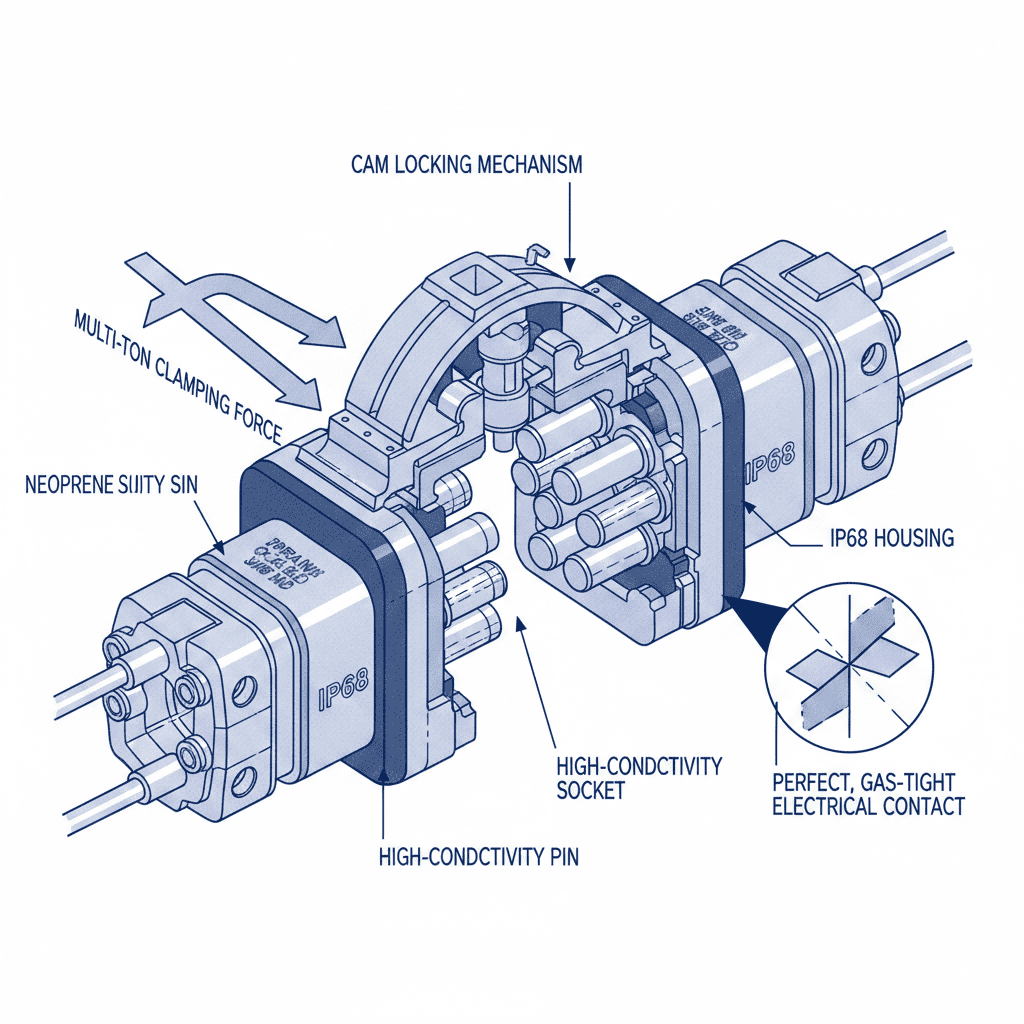
- Housings: Die-cast aluminum (lightweight yet rugged) or 316 stainless steel (corrosion-resistant for coastal/chemical environments); flame-retardant plastic (cost-effective for indoor use).
- Contacts: Silver-nickel or silver-tungsten (resist arcing and corrosion, ensuring reliable conductivity in high-current applications); copper contacts for lower-current heavy-duty use.
- Seals & Gaskets: Silicone or Viton (water/dust resistance, IP65/IP67 rating) to protect against harsh industrial conditions (e.g., rain, dust, chemicals).
- Locking Mechanism: Reinforced cammed design (compliant with IEC 60309-2) for secure connection, even during high vibration (e.g., generator operation, construction equipment).
Application Case Study: Material Upgrade for Coastal Environments
A coastal oil refinery used standard aluminum cam lock connectors, which corroded within 6 months due to saltwater exposure. The refinery replaced them with 316 stainless steel connectors (Delta Electronics Cam Lock Series), which resisted salt corrosion and UV radiation. The new connectors lasted 5 years without replacement, reducing maintenance costs by 90%.
2.4 Additional Critical Features
- Color Coding: Standardized color-coding (red, black, blue, white, green) for poles/voltage to prevent misconnection (e.g., red = phase 1, green = ground).
- Arc Suppression: Built-in arc chutes or magnetic arc suppression (critical for 100A+ applications) to extinguish arcing during connection/disconnection.
- Interlocking Design: Prevents plug insertion unless the locking mechanism is engaged, reducing shock hazards.
- IP Rating: IP65 (dust-tight, water-resistant) for general industrial use; IP67 (temporary submersion) for outdoor/harsh environments (e.g., construction sites, washdown areas).
3. High-Current Industrial Applications for Heavy-Duty Cam Lock Connectors
3.1 Construction Sites & Temporary Power Distribution
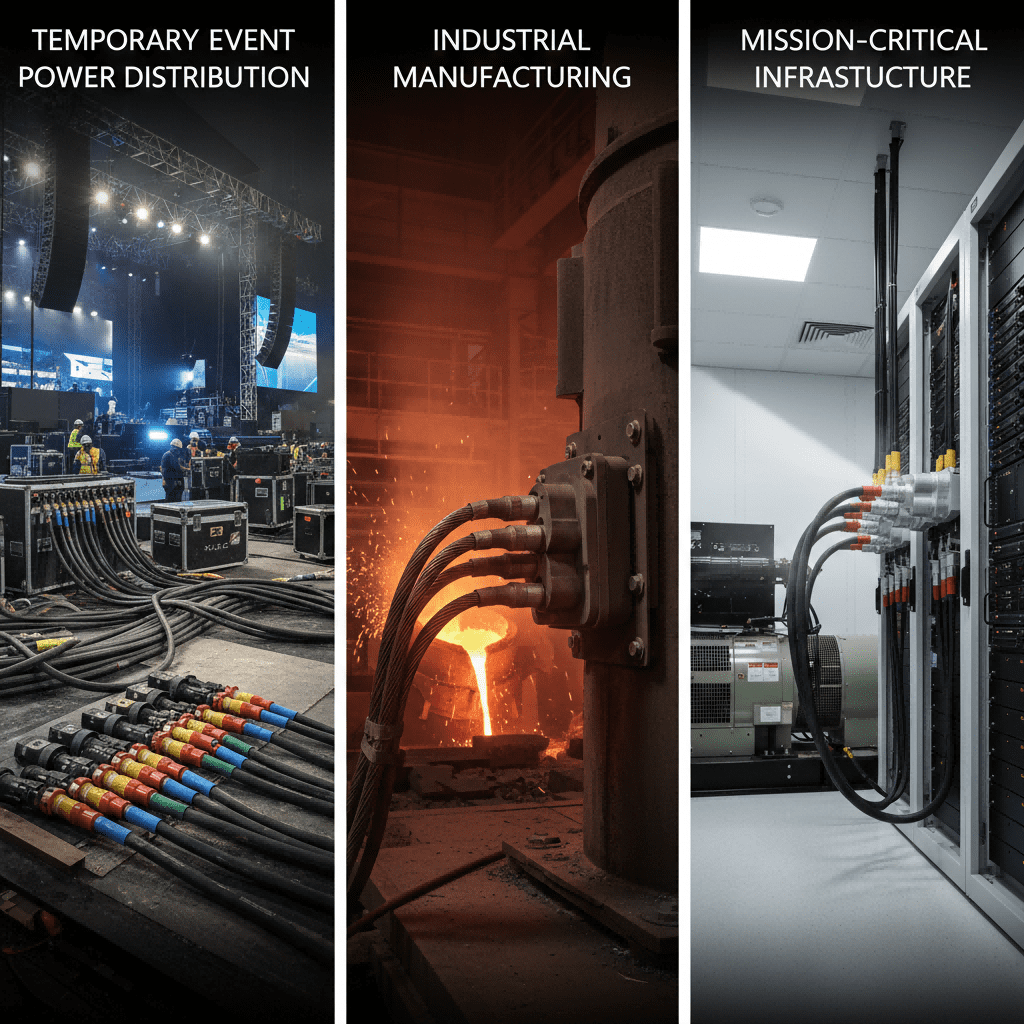
Construction sites rely on cam lock connectors for portable, high-current power from generators to equipment.
Key Uses & Case Study
- Applications: Powering concrete pumps, electric cranes, welding equipment, and temporary lighting; connecting generators to site distribution boxes.
- Case Study: A skyscraper construction project in Dubai used 100A 5-pole cam lock connectors (Siemens Cam Lock Series) for its tower cranes and generators. The IP67 rating protected against sandstorms and occasional rain, while the 5-pole design ensured safe grounding. The connectors withstood 18 months of heavy use, providing reliable power without downtime.
3.2 Manufacturing & Industrial Machinery
Heavy-duty manufacturing equipment demands consistent high-current power, making cam lock connectors ideal for production lines.
Key Uses & Case Study
- Applications: Electric motors, industrial furnaces, compressors, and assembly line machinery; connecting machinery to factory power distribution systems.
- Case Study: An automotive assembly plant used 200A 4-pole cam lock connectors for its robotic welding arms. The connectors’ arc suppression handled the welding equipment’s current spikes, while the durable aluminum housing resisted factory dust and vibration. The connectors maintained 99.9% reliability over 3 years, reducing equipment downtime by 45%.
3.3 Industrial Power Distribution & Generators
Cam lock connectors are critical for linking generators, transformers, and distribution boxes in industrial power systems.
Key Uses & Case Study
- Applications: Backup generator connections (data centers, hospitals), industrial transformer hookups, and power distribution in remote industrial sites (e.g., mines, oil fields).
- Case Study: A remote mining site used 300A 5-pole cam lock connectors to connect its backup generators to the main power grid. The connectors’ high-current capacity handled the site’s 250A load, while the IP67 rating protected against dust and rain. The system provided uninterrupted power during grid outages, preventing $50,000+ in lost productivity per outage.
3.4 Marine & Coastal Industrial Operations
Corrosion-resistant cam lock connectors are essential for marine and coastal industrial environments.
Key Uses & Case Study
- Applications: Shipboard power distribution, coastal oil rigs, and marine construction equipment (e.g., dredges, pile drivers).
- Case Study: A coastal wind farm used 150A stainless steel cam lock connectors (Allen-Bradley Cam Lock Series) for its turbine power cables. The connectors resisted saltwater corrosion and UV radiation, operating reliably for 4 years. The corrosion-resistant design eliminated the need for frequent replacements, cutting maintenance costs by 75%.
4. Top Heavy-Duty Cam Lock Connector Solutions
4.1 Light Heavy-Duty (30A–60A)
- Schneider Electric LC1D Series: 30A–60A, 400V AC, 3/4/5-pole, IP65 rating, die-cast aluminum housing. Ideal for portable generators, small pumps, and light construction equipment.
- Siemens 3SU1 Series: 40A–60A, 480V AC, 5-pole, silver-nickel contacts, interlocking design. Used for indoor manufacturing machinery and auxiliary power systems.
4.2 Medium Heavy-Duty (100A–200A)
- ABB CP1 Cam Lock Series: 100A–200A, 600V AC, 3/4/5-pole, 316 stainless steel housing option, IP67 rating. Suitable for construction equipment, industrial motors, and coastal applications.
- Delta Electronics DTB Series: 150A–200A, 400V AC, arc suppression, color-coded poles, vibration-resistant. Used for manufacturing lines and generator connections.
4.3 Extreme Heavy-Duty (300A–400A+)
- Allen-Bradley 800F Series: 300A–400A, 600V AC, 5-pole, silver-tungsten contacts, IP65 rating. Ideal for industrial transformers, electric arc furnaces, and large compressors.
- Hubbell HBL Series: 350A–400A, 600V AC, reinforced cam lock mechanism, high-temperature resistance (up to 85°C). Used for extreme heavy-duty applications like steel mills and power plants.
5. Step-by-Step Installation & Maintenance Best Practices
5.1 Installation Guidelines
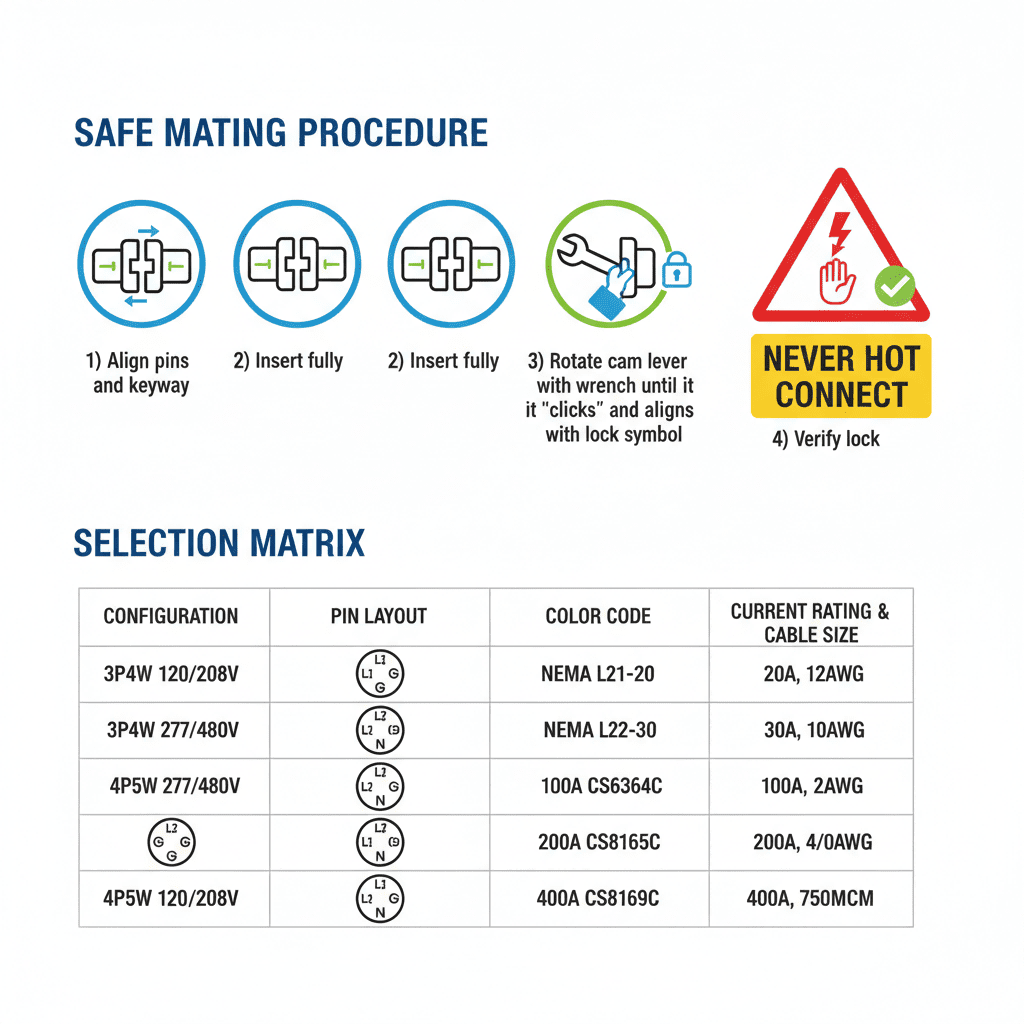
- Pre-Installation Checks: Verify current/voltage/pole rating compatibility with equipment; inspect connectors for damage (cracked housings, bent contacts); clean contacts with a dry brush to remove dust/corrosion.
- Wiring Preparation: Use copper wire of sufficient gauge (e.g., 4 AWG for 100A, 2 AWG for 200A) to handle high current; crimp heavy-duty terminals (avoid soldering, which melts under high heat); strip wire insulation to the connector’s specified length (typically 10–15mm).
- Connection Process: Align plug and socket by color code; insert fully and twist the cam lock clockwise until it clicks (ensures secure engagement); pull gently to confirm locking; test continuity with a multimeter before powering on.
- Mounting: Secure connectors to stable surfaces (e.g., distribution boxes, equipment frames) to withstand vibration; use cable glands to seal wire entries (maintain IP rating).
5.2 Maintenance Tips
- Regular Inspections: Check connectors monthly for loose connections, arcing damage, or corrosion; retighten terminals if needed (follow manufacturer torque specs, typically 2–3 N·m).
- Cleaning: Wipe housings with a damp cloth (avoid harsh chemicals); clean contacts with a contact cleaner spray (for heavy corrosion) — ensure connectors are disconnected and dry before reuse.
- Replacement: Replace connectors if contacts are worn/arced, housings are cracked, or gaskets are damaged (compromises IP rating); replace gaskets annually for outdoor/harsh environment use.
Case Study: Proper Installation for Construction GeneratorsA construction company installed cam lock connectors for its generators but failed to crimp terminals properly. Loose connections caused arcing and generator downtime. The company re-installed the connectors with heavy-duty crimp tools and torque wrenches, following the manufacturer’s specs. The fix eliminated arcing and ensured reliable power for the project’s duration.
6. Troubleshooting Common Issues
6.1 Connector Overheats
- Causes: Undersized wire gauge, overloaded current, loose connections, poor contact conductivity.
- Fixes: Upgrade to larger-gauge wire, replace with a higher-current connector, re-tighten terminals to torque spec, clean/replace corroded contacts.
6.2 Arcing During Connection/Disconnection
- Causes: Low-quality contacts, insufficient arc suppression, disconnecting under load (not following lockout/tagout).
- Fixes: Use connectors with silver-nickel/silver-tungsten contacts, choose models with arc chutes, ensure power is off before disconnecting.
6.3 Corrosion & Water Ingress
- Causes: IP rating mismatch, damaged gaskets, coastal/saltwater exposure.
- Fixes: Replace with IP67-rated connectors, install new gaskets, use stainless steel connectors for coastal environments.
6.4 Accidental Disconnection
- Causes: Weak cam lock mechanism, vibration, improper installation.
- Fixes: Replace with reinforced cam lock models, secure connectors to stable surfaces, ensure full engagement (twist until click).
7. Conclusion & Reference Resources
Heavy-duty cam lock connectors are indispensable for high-current industrial power distribution, offering secure, reliable connections for heavy machinery, generators, and construction equipment. Their rugged design, high-current ratings, and pole configuration flexibility make them the top choice for demanding industrial environments.
Key takeaways:
- Match current/voltage ratings to equipment needs (size up by 20–30% for inrush current).
- Choose pole configuration based on power system design (5-pole for maximum safety).
- Prioritize durable materials (stainless steel for coastal use, die-cast aluminum for general industrial) and arc suppression features.
- Follow proper installation (correct wire gauge, crimping, locking) and maintenance to prevent arcing, overheating, and corrosion.
Appendix: Key Reference Resources
- IEC 60309-2: Standard for Heavy-Duty Industrial Plugs, Sockets, and Couplers
- UL 1686: North American Standard for Cam Lock Connectors
- NEC Article 406: Industrial Socket and Connector Installation Requirements
- ABB: Cam Lock Connector Technical Datasheet
- Schneider Electric: Heavy-Duty Cam Lock Application Guide
- National Electrical Manufacturers Association (NEMA): High-Current Connector Guidelines