
1. Introduction
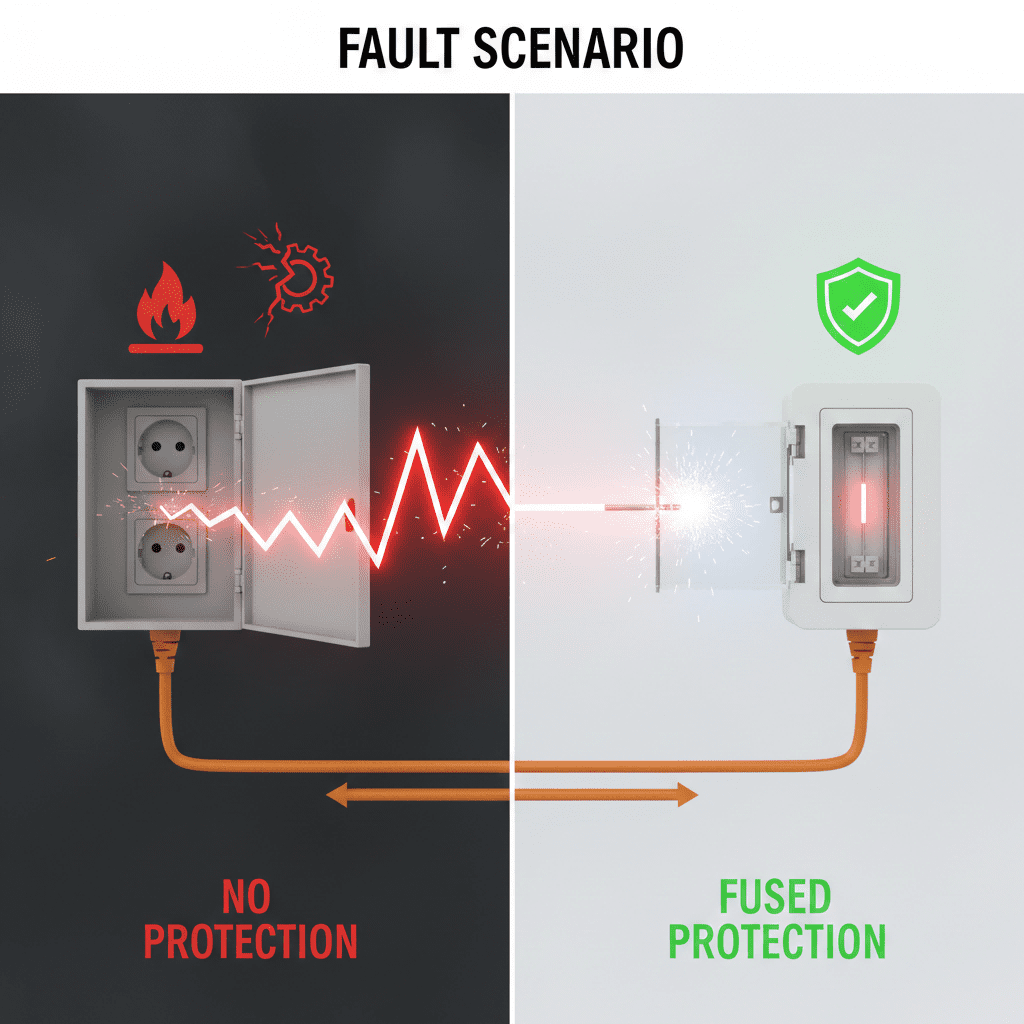
Switch sockets with fuse are critical components in industrial power distribution, merging the convenience of a switchable socket with the protection of a built-in fuse. These dual-function devices regulate power flow to equipment while safeguarding against overloads, short circuits, and electrical faults—risks that can cause equipment damage, fires, or costly downtime in industrial settings.
Unlike standard switch sockets, fused models add a layer of proactive protection: the fuse melts to cut power when current exceeds safe limits, preventing overheating and electrical hazards. For example, a manufacturing plant using non-fused sockets experienced a $10,000 equipment loss after a short circuit in a conveyor system; upgrading to fused switch sockets eliminated similar incidents by stopping power before damage occurred.
This guide explores the key specifications, safety mechanisms, efficiency benefits, industrial applications, and selection best practices for switch sockets with fuse. Whether you’re powering assembly line machinery, control panels, or auxiliary equipment, this guide ensures you choose fused switch sockets that balance safety, compliance, and operational efficiency.
Key terms defined upfront:
- Switch Socket with Fuse: An industrial power connector combining a switch (to control power flow) and a fuse (to protect against overloads/short circuits) in a single unit.
- Fuse Rating: The maximum current (amps, A) the fuse can safely carry before melting—matched to the connected equipment’s current draw.
- Overload Protection: The fuse’s ability to interrupt power when current exceeds the rated limit (prevents overheating of wires and equipment).
- Switch Function: A built-in toggle or push-button switch to manually turn power on/off, eliminating the need for separate switches.

2. Critical Specifications of Switch Sockets with Fuse
2.1 Fuse Rating & Current Capacity: Matching Equipment Needs
The fuse rating and socket current capacity are the foundation of safe operation—they must align with the connected equipment’s power requirements.
Common Fuse & Current Ratings
- Fuse Ratings: 3A–16A (low-power equipment: sensors, control panels, small motors); 20A–32A (medium-power: pumps, conveyors, lighting systems); 40A–63A (high-power: industrial heaters, heavy-duty tools).
- Socket Current Capacity: Typically 10%–20% higher than the fuse rating (e.g., a 16A fuse pairs with a 20A socket) to handle inrush current without tripping.
- Voltage Compatibility: 230V AC single-phase (auxiliary equipment), 400V AC three-phase (heavy machinery), 12V/24V DC (low-voltage industrial systems).
Application Case Study: Fuse Rating Mismatch Risk
A food processing plant used 10A fused switch sockets for 15A packaging machinery. The fuses repeatedly tripped during startup, disrupting production. After verifying the equipment’s inrush current (20A peak), the plant upgraded to 16A fuses with 20A sockets (Schneider Electric XB4 Series). The new rating handled startup currents while protecting against sustained overloads, reducing downtime by 90%.
2.2 Fuse Type: Industrial-Grade Protection
Industrial switch sockets with fuse use specialized fuse types to withstand harsh conditions and ensure reliable protection.
Key Fuse Types for Industrial Use
- Cartridge Fuses: Cylindrical fuses (e.g., BS 88, IEC 60269) for high-current applications (20A+). Resist vibration and temperature extremes—ideal for manufacturing machinery.
- Blade Fuses: Flat, compact fuses (e.g., ATO/ATC) for low-power equipment (3A–16A). Easy to replace, making them suitable for control panels and auxiliary systems.
- Slow-Blow Fuses: Designed to tolerate temporary inrush currents (e.g., motor startup) without tripping. Critical for equipment with high initial power demands.
- Fast-Blow Fuses: Trip immediately on overload—used for sensitive electronics (e.g., sensors, PLCs) that require rapid protection.
Application Case Study: Fuse Type Optimization for Motors
A wastewater treatment plant used fast-blow fuses in switch sockets powering 30A pumps. The fuses tripped during startup due to inrush current. Switching to slow-blow cartridge fuses (ABB CP1 Series) resolved the issue—they tolerated startup currents while tripping on sustained overloads. The upgrade ensured reliable pump operation and reduced maintenance calls by 75%.
2.3 Mechanical & Environmental Features
Industrial switch sockets with fuse must withstand harsh conditions while maintaining functionality and protection.
Key Design & Material Features
- Housings: Die-cast aluminum (rugged industrial use), stainless steel (corrosion-resistant for coastal/chemical environments), or flame-retardant plastic (lightweight for control panels).
- IP Rating: IP44 (clean indoor areas: offices, control rooms); IP65 (dust-tight, water-resistant for factories, warehouses); IP67 (washdown environments: food processing, chemical plants).
- Switch Mechanism: Toggle switches (easy to operate with gloves) or push-button switches (prevents accidental activation). Some models feature lockable switches for security.
- Fuse Accessibility: Removable fuse covers (tool-free or tool-required) for quick replacement—critical for minimizing downtime during fuse trips.
Application Case Study: IP Rating Upgrade for Washdown Areas
A dairy plant installed IP44 fused switch sockets for cleaning equipment. Daily high-pressure washdowns caused water ingress, damaging fuses and sockets. The plant upgraded to IP67 stainless steel models (Siemens 3SU1 Series), which withstood steam cleaning and chemical sanitizers. The new sockets maintained protection and compliance with FDA standards, eliminating water-related failures.
2.4 Safety & Compliance
- Certifications: CE (European), UL (North American), CSA (Canadian) to meet regional standards (e.g., IEC 60947-5-1 for switches, IEC 60269 for fuses).
- Flame Rating: V0 (UL 94) for housings—prevents fire spread if internal components fail.
- Short-Circuit Protection: Fuse interrupt rating (typically 10kA–20kA) to safely interrupt short-circuit currents without exploding.
3. Safety & Efficiency Benefits for Industrial Power Distribution
3.1 Safety Benefits: Mitigating Industrial Electrical Risks
Switch sockets with fuse address key electrical hazards in industrial settings:
- Overload Protection: Prevents wires and equipment from overheating (a leading cause of industrial fires) by tripping the fuse when current exceeds limits.
- Short-Circuit Protection: Rapidly cuts power during short circuits (e.g., damaged wires, equipment malfunctions) to avoid electric shocks and equipment destruction.
- Simplified Isolation: The built-in switch allows safe equipment isolation for maintenance (no need to disconnect plugs or access main breakers).
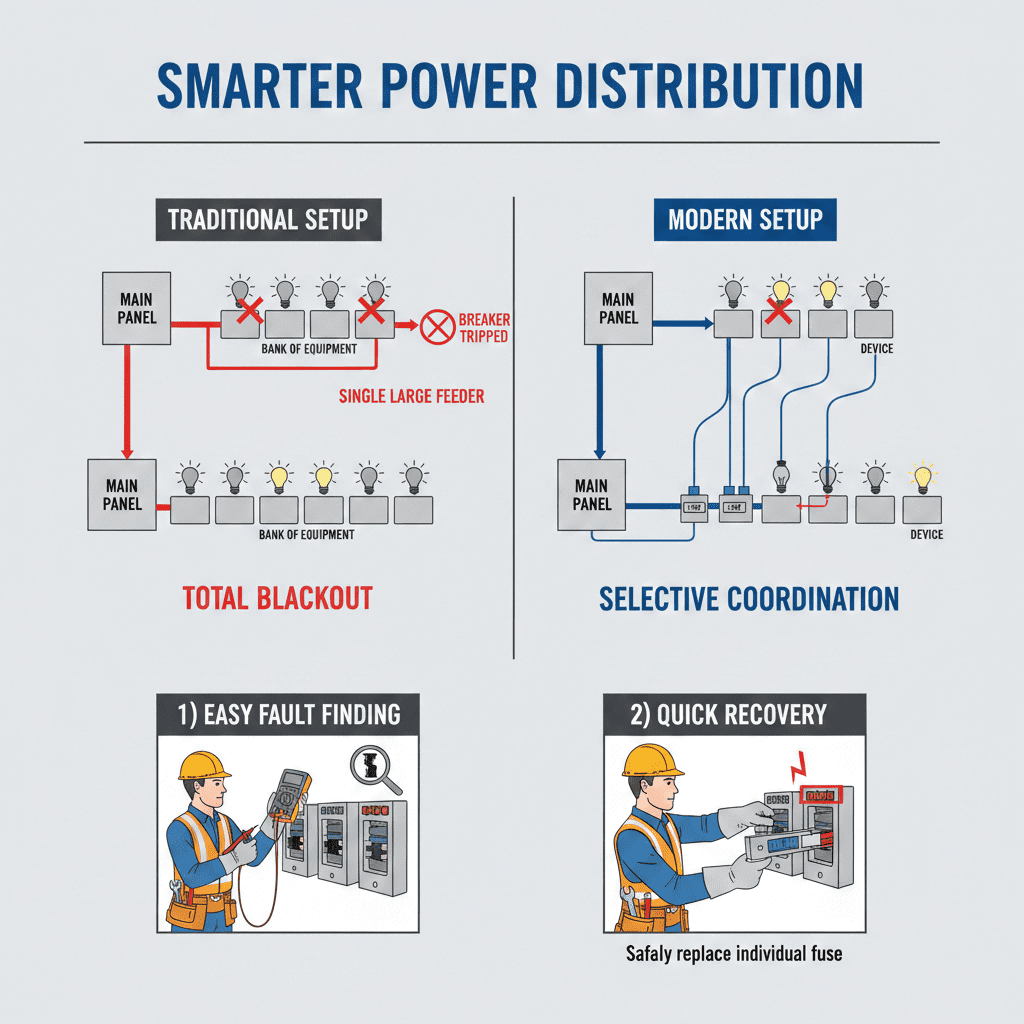
- Visual Fault Indication: Some models feature LED indicators to signal blown fuses—speeds up troubleshooting and reduces downtime.
Case Study: Safety Upgrade in a Metal Fabrication Plant
A metal fabrication plant replaced non-fused sockets with fused switch sockets (Allen-Bradley 800F Series) on its welding stations. Within six months, a short circuit in a welding torch triggered the fuse, cutting power before the fault spread to the main panel. The fuse prevented a potential fire, avoiding $50,000 in damage and ensuring worker safety.
3.2 Efficiency Benefits: Optimizing Power Distribution
Beyond safety, fused switch sockets improve operational efficiency:
- Reduced Downtime: Quick fuse replacement (vs. repairing damaged equipment or wiring) minimizes production interruptions.
- Simplified Installation: Combined switch and fuse eliminate the need for separate components, reducing wiring complexity and installation time.
- Energy Savings: Prevents energy waste from overloaded equipment (which draws excess power) and avoids costly damage to expensive machinery.
- Targeted Protection: Fuses can be sized for individual equipment, ensuring precise protection without affecting other parts of the power system.
Case Study: Efficiency Gains in a Logistics Warehouse
A logistics warehouse installed fused switch sockets for its conveyor systems and packaging equipment. The targeted fuse ratings prevented overloads, reducing equipment breakdowns by 60%. The built-in switches allowed workers to turn off idle equipment, cutting energy consumption by 15% annually. Fuse replacement took less than 5 minutes, minimizing downtime compared to previous wiring repairs (which took 1–2 hours).
4. Industrial Applications for Switch Sockets with Fuse
4.1 Manufacturing & Assembly Lines
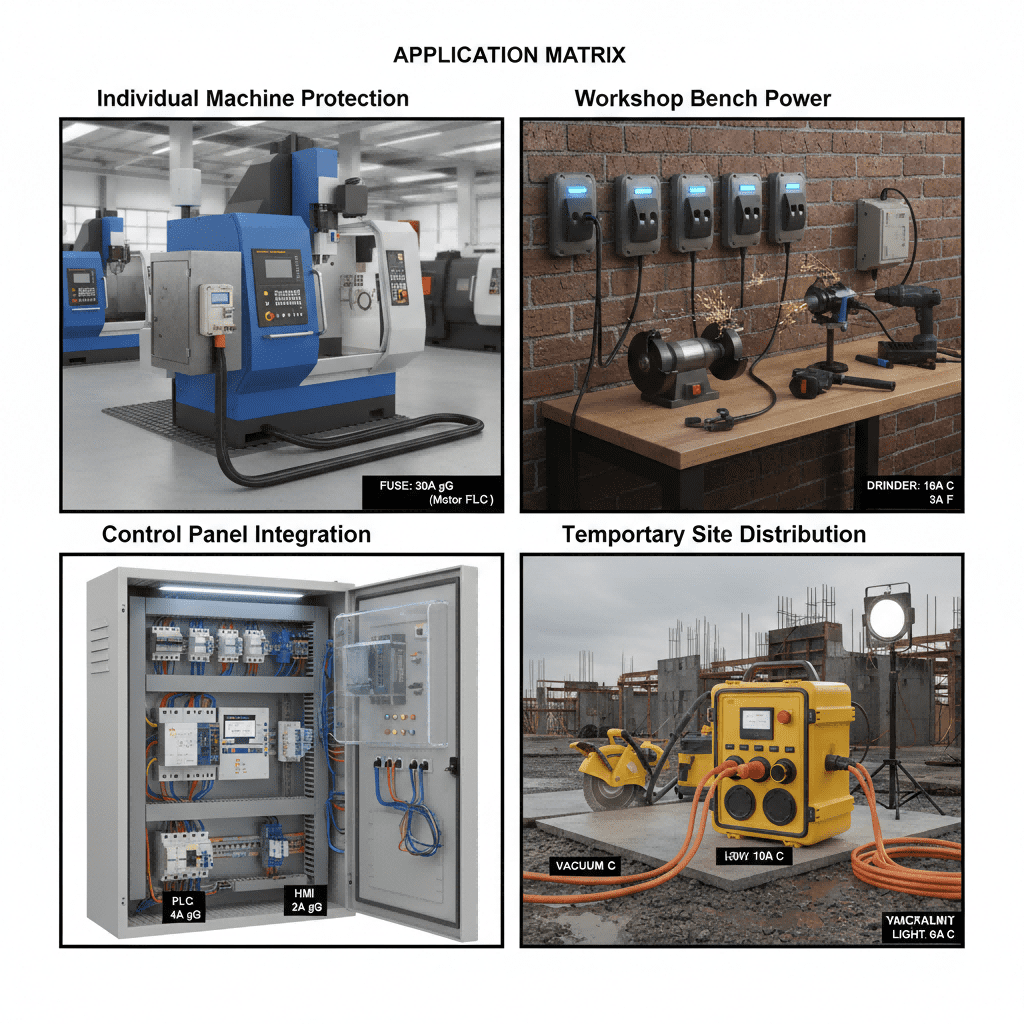
- Use Case: Powering conveyors, robotic arms, welding equipment, and packaging machinery.
- Specifications: 20A–32A current capacity, IP65 rating, slow-blow cartridge fuses (handles inrush current), lockable switches (prevents unauthorized use).
- Case Study: An automotive assembly plant used 32A fused switch sockets (Schneider Electric XB4 Series) for its robotic welding stations. The slow-blow fuses tolerated startup currents, while the IP65 rating protected against welding sparks and dust. The sockets reduced electrical faults by 85% and simplified maintenance.
4.2 Industrial Control Panels & Auxiliary Equipment
- Use Case: Powering PLCs, sensors, temperature controllers, and small pumps.
- Specifications: 3A–16A current capacity, IP44/IP65 rating, blade fuses (easy replacement), LED fault indicators.
- Case Study: A pharmaceutical plant installed 10A fused switch sockets in its control panels. The blade fuses protected sensitive electronics from overloads, while LED indicators quickly identified blown fuses. The sockets reduced control panel downtime by 70% and ensured compliance with GMP standards.
4.3 Food Processing & Washdown Environments
- Use Case: Powering cleaning equipment, mixers, and packaging machines (requires hygiene and water resistance).
- Specifications: 16A–20A current capacity, IP67/IP69K rating, stainless steel housing, sealed fuse compartments.
- Case Study: A bakery used IP69K fused switch sockets (ABB CP1 Series) for its dough mixers and cleaning tools. The stainless steel housing resisted corrosion from water and flour, while the sealed fuse compartment prevented contamination. The sockets maintained protection through daily washdowns, with zero hygiene-related violations.
4.4 Construction Sites & Temporary Power
- Use Case: Powering portable tools, temporary lighting, and generator connections.
- Specifications: 32A–63A current capacity, IP65 rating, heavy-duty housing, tool-free fuse replacement.
- Case Study: A construction site used 40A fused switch sockets (Delta Electronics DTB Series) for its generators and power tools. The heavy-duty housing withstood impacts and dust, while tool-free fuse replacement minimized downtime. The sockets prevented overloads from daisy-chained tools, reducing equipment damage and improving site safety.
5. Step-by-Step Selection Process
5.1 Step 1: Calculate Equipment Power Requirements
- Check the equipment’s nameplate for current draw (amps) and voltage (V).
- Select a fuse rating 10%–20% higher than the continuous current (e.g., 15A equipment needs a 16A fuse) to handle inrush current.
- Match the socket current capacity to the fuse rating (e.g., 16A fuse → 20A socket).
5.2 Step 2: Evaluate the Operating Environment
- Indoor/Clean: IP44 rating, plastic or aluminum housing.
- Industrial/Dusty: IP65 rating, dust-tight design.
- Washdown/Outdoor: IP67/IP69K rating, stainless steel housing, sealed fuse compartment.
- Vibration-Prone: Heavy-duty housing, vibration-resistant fuses (cartridge type).
5.3 Step 3: Choose Fuse Type & Switch Design
- Fuse Type: Slow-blow for motors/pumps (inrush current); fast-blow for electronics (sensitive equipment).
- Switch Design: Toggle switch for easy operation; push-button switch for safety-critical applications; lockable switch to prevent unauthorized use.
5.4 Step 4: Verify Safety & Compliance
- Ensure certifications (CE, UL, CSA) match regional standards.
- Check the fuse interrupt rating (minimum 10kA) for industrial short-circuit protection.
- Confirm flame rating (V0) for fire safety.
5.5 Step 5: Consider Installation & Maintenance Needs
- Mount Type: Panel mount (control panels), surface mount (equipment), or portable socket boxes (construction sites).
- Fuse Accessibility: Tool-free replacement for frequent fuse trips; sealed compartments for hygiene-critical areas.
- Accessories: Fuse holders, dust caps, or cable glands to enhance protection and installation.
Example Selection Workflow: A chemical plant needs sockets for 25A pumps (400V AC, washdown area). Selection: 32A fused switch socket, IP69K stainless steel housing, slow-blow cartridge fuse, lockable toggle switch (Schneider Electric XB4 Series).
6. Installation & Maintenance Best Practices
6.1 Installation Guidelines
- Turn off power and lock out/tag out before installation to prevent electric shock.
- Use wire gauge matching the socket current capacity (e.g., 12 AWG for 20A, 10 AWG for 30A).
- Crimp terminals onto wire ends (avoid soldering, which melts under high current).
- Tighten terminal screws to manufacturer specs (typically 0.8–1.5 N·m) to prevent loose connections and overheating.
- Seal wire entry points with cable glands to maintain IP rating (critical for outdoor/washdown use).
6.2 Maintenance Tips
- Inspect sockets monthly for damage (cracked housings, loose switches) and clean dust/debris from fuse compartments.
- Replace fuses with the exact rating (never use a higher-rated fuse—compromises protection).
- Test switch functionality and fuse continuity with a multimeter quarterly.
- Replace gaskets annually (for IP65+ models) to maintain water/dust resistance.
Case Study: Proper Installation for Control PanelsA manufacturing plant installed fused switch sockets but used undersized 14 AWG wire for 20A sockets. The wires overheated, causing fuse trips and socket damage. The plant re-wired with 12 AWG copper wire and crimp terminals, resolving the issue. Regular maintenance (monthly inspections, annual gasket replacement) ensured 3 years of reliable operation.
7. Conclusion & Reference Resources
Switch sockets with fuse are indispensable for safe, efficient industrial power distribution—they combine switchable power control with targeted overload/short-circuit protection, mitigating risks and optimizing operations. By matching fuse ratings to equipment needs, selecting appropriate environmental protection, and following installation best practices, you’ll ensure reliable performance and compliance.
Key takeaways:
- Fuse rating should be 10%–20% higher than equipment continuous current (handles inrush current).
- IP rating must align with the environment (IP65 for industrial, IP67/69K for washdown/outdoor).
- Slow-blow fuses suit motors/pumps; fast-blow fuses protect sensitive electronics.
- Proper wire gauge, terminal torque, and maintenance extend socket lifespan and ensure protection.
Appendix: Key Reference Resources
- IEC 60947-5-1: Standard for Industrial Switch Sockets
- IEC 60269: Standard for Low-Voltage Fuses
- UL 498: North American Standard for Switch Sockets
- UL 248: North American Standard for Fuses
- Schneider Electric: Fused Switch Socket Technical Datasheet
- Siemens: Industrial Fused Socket Application Guide
- National Electrical Code (NEC) Article 406: Socket Outlet Requirements