
1. Mobile vs. Fixed Industrial Socket Boxes
Industrial socket boxes are the backbone of power distribution in manufacturing plants, construction sites, and outdoor industrial facilities. They centralize power access, protect electrical connections from harsh environments, and ensure safe, efficient energy delivery to machinery, tools, and auxiliary equipment. Among the two primary configurations—mobile and fixed industrial socket boxes—each is engineered to address distinct power distribution challenges.
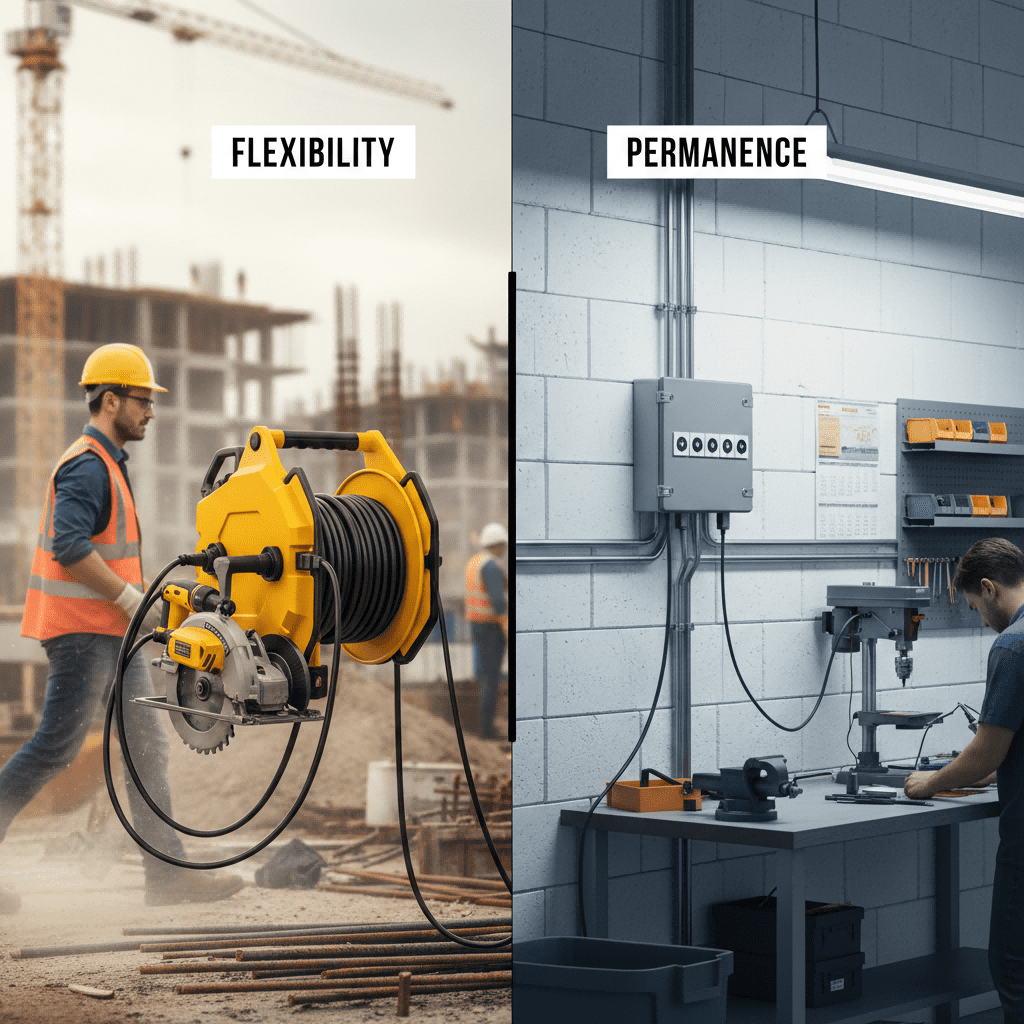
Mobile socket boxes offer unparalleled flexibility, designed for temporary or dynamic power needs (e.g., construction sites, event setups), while fixed socket boxes provide permanent, reliable power distribution for stationary equipment (e.g., production lines, control rooms). Choosing the wrong type can lead to operational inefficiencies, safety hazards, or unnecessary costs.
This comprehensive guide explores the technical nuances, advantages, and limitations of mobile and fixed industrial socket boxes. It includes detailed comparison metrics, real-world application case studies, environmental compatibility analysis, and a step-by-step selection process to help you determine which solution aligns with your power distribution needs.
Key terms defined upfront:
- Mobile Industrial Socket Box: A portable power distribution unit with integrated sockets, designed for temporary or movable power access. Features wheels, handles, or carrying cases for easy transportation.
- Fixed Industrial Socket Box: A stationary power distribution unit mounted to walls, floors, or control panels, intended for permanent power access to stationary equipment.
- Power Distribution Capacity: The maximum electrical load (current/voltage) the socket box can safely handle, determined by internal wiring, circuit breakers, and socket ratings.
- Environmental Rating: IP (Ingress Protection) classification indicating resistance to dust, water, and debris—critical for industrial harsh environments.
2. Core Differences: Mobile vs. Fixed Industrial Socket Boxes
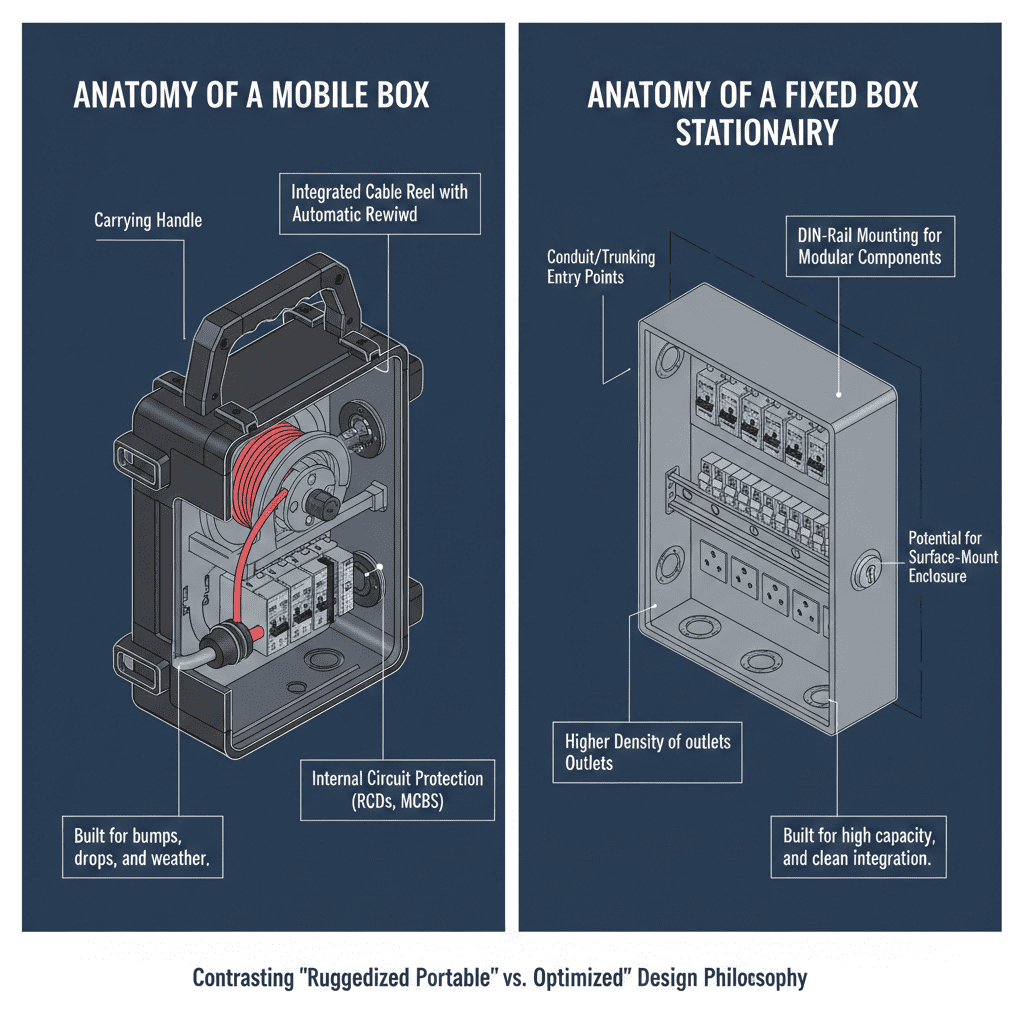
Understanding the technical, mechanical, and functional distinctions between mobile and fixed socket boxes is fundamental to selecting the right solution.
2.1 Technical Specifications Comparison
| Feature | Mobile Industrial Socket Boxes | Fixed Industrial Socket Boxes |
|---|---|---|
| Current Capacity | 16A–63A (standard); 100A+ (heavy-duty construction/site use) | 16A–125A (standard); 200A+ (high-power manufacturing) |
| Voltage Compatibility | 230V AC single-phase; 400V AC three-phase; 12V/24V DC (low-voltage models) | 230V AC single-phase; 400V AC three-phase; 600V AC (industrial high-voltage) |
| Number of Sockets | 2–8 outlets (standard); 12+ (modular designs for large sites) | 4–24 outlets (customizable for control panels/facilities) |
| Circuit Protection | Integrated circuit breakers; RCD (Residual Current Device) for shock protection; overload fuses | Circuit breakers per socket bank; surge protection; thermal overload relays; optional RCD |
| IP Rating | IP44–IP67 (dust/water-resistant for outdoor/construction use) | IP44–IP69K (washdown-compatible for food processing/chemical plants) |
| Mounting & Mobility | Wheels, telescopic handles, or carrying cases; lightweight (10–50kg) | Wall-mounted, floor-mounted, or panel-integrated; fixed installation (20–100kg+) |
| Wiring Configuration | Flexible cables (5–20m); detachable power cords; twist-lock input plugs | Hardwired to main power; permanent conduit connections; busbar integration for large facilities |
| Material Construction | Die-cast aluminum or reinforced polyamide; impact-resistant housing | Stainless steel, die-cast aluminum, or sheet metal; corrosion-resistant for harsh environments |
| Key Safety Features | Lockable lids; cable management systems; overload indicators | Ground fault protection; fire-retardant housing; access doors with safety interlocks |
2.2 Functional Advantages & Limitations (Mobile vs. Fixed Industrial Socket Boxes)
Mobile Industrial Socket Boxes
- Advantages:
- Flexibility: Easily relocated to match dynamic power needs (e.g., moving construction equipment, temporary workstations).
- Quick Deployment: No permanent installation required—unpack, connect to a power source, and use immediately.
- Modularity: Many models accept interchangeable socket modules (Type A, Type I, CEE) for global compatibility.
- Emergency Use: Ideal for power outages or temporary facilities (e.g., disaster response, event setups).
- Limitations:
- Lower Maximum Capacity: Most standard models top out at 63A, making them unsuitable for high-power permanent equipment.
- Cable Management Risks: Long power cords can create trip hazards if not properly secured.
- Environmental Constraints: While IP-rated, extreme weather (prolonged rain, high winds) may require additional protection.
Fixed Industrial Socket Boxes
- Advantages:
- High Power Capacity: Supports 125A+ currents for heavy machinery (e.g., industrial furnaces, production lines).
- Stability: Permanent mounting eliminates movement-related connection issues (e.g., loose plugs, cable damage).
- Customization: Configurable with mixed socket types, voltage ratings, and protection features (e.g., surge protection, RCD).
- Long-Term Durability: Built for continuous use in harsh industrial environments; minimal maintenance required.
- Limitations:
- Lack of Flexibility: Cannot be relocated without rewiring, making them unsuitable for temporary or mobile operations.
- Higher Installation Costs: Requires professional hardwiring, conduit installation, and compliance inspections.
- Lead Time: Custom configurations (e.g., specialized sockets, high-voltage compatibility) may have longer delivery times.
3. Real-World Application Case Studies
3.1 Case Study 1: Construction Site Power Distribution (Mobile Socket Boxes)
- Challenge: A commercial construction company building a 15-story office tower needed flexible power for welding equipment, concrete pumps, and temporary lighting across multiple floors. Fixed socket boxes were impractical due to the site’s dynamic layout and frequent equipment relocation.
- Solution: The company deployed 10 modular mobile socket boxes (32A, 400V AC three-phase, IP65 rating) with 6 outlets each (Schneider Electric Mobile Power Series). The boxes featured wheels for easy transport between floors and interchangeable CEE socket modules. They were connected to a central generator via 15m heavy-duty cables, with cable ramps to prevent trip hazards.
- Results:
- Power was deployed to any floor in 15 minutes or less, reducing equipment downtime by 60%.
- The IP65 rating protected against rain and construction dust, with zero electrical failures during the 18-month project.
- Modular sockets accommodated tools from different subcontractors (European/North American plug types), eliminating adapter needs.
- Total cost savings of $30,000 compared to installing temporary fixed boxes on each floor.
3.2 Case Study 2: Manufacturing Plant Production Line (Fixed Socket Boxes)
- Challenge: An automotive assembly plant needed reliable power distribution for 20 robotic welding arms, conveyor belts, and control panels along a 100m production line. The equipment was stationary, requiring continuous, high-current power (63A per station) with zero downtime.
- Solution: The plant installed a custom fixed industrial socket box system (63A, 400V AC three-phase, IP67 rating) with 24 outlets (ABB Fixed Power Series). The boxes were hardwired to the plant’s main power grid via busbars, with individual circuit breakers for each outlet. They included surge protection and RCDs to safeguard sensitive robotics. The boxes were mounted 2m above the floor to avoid damage from equipment or cleaning.
- Results:
- Zero power interruptions over 3 years of operation, with 99.9% reliability.
- Individual circuit breakers simplified troubleshooting—faults in one station didn’t affect the entire line.
- Compliance with IEC 60309 and OSHA standards, eliminating safety violations.
- Maintenance costs reduced by 75% compared to the previous mobile box setup (no cable wear or relocation damage).
3.3 Case Study 3: Food Processing Plant Washdown Area (Fixed Socket Boxes)
- Challenge: A dairy processing plant required power for cleaning equipment (high-pressure hoses, sanitizing machines) and packaging lines in a washdown area. The environment demanded water resistance (IP69K rating) and corrosion protection, with no tolerance for water ingress or contamination.
- Solution: The plant installed stainless steel fixed socket boxes (32A, 230V AC single-phase, IP69K rating) with sealed outlets (Siemens Hygienic Design Series). The boxes featured hinged, gasketed lids that sealed tightly when not in use, preventing water and chemical ingress during washdowns. They were hardwired with corrosion-resistant cables and mounted on stainless steel brackets to avoid contact with wet floors.
- Results:
- Complied with FDA and EU hygiene standards, with zero contamination incidents.
- The IP69K rating withstanded daily high-pressure steam cleaning, with no socket failures over 2 years.
- Sealed design reduced maintenance by eliminating debris buildup in outlets.
3.4 Case Study 4: Remote Mining Site (Hybrid Mobile + Fixed System)
- Challenge: A remote gold mining site needed power for stationary equipment (crushers, generators) and mobile tools (drills, loaders). The site was spread over 5km, with some areas requiring permanent power and others needing flexible access for mobile machinery.
- Solution: The site implemented a hybrid system:
- Fixed socket boxes (125A, 400V AC three-phase, IP67 rating) near stationary crushers and processing plants, hardwired to the main power grid.
- Mobile socket boxes (63A, 400V AC three-phase, IP65 rating) for remote drilling sites, connected to portable generators.
- A central distribution panel linked the fixed and mobile systems, allowing power sharing during peak demand.
- Results:
- Stationary equipment operated with 100% reliability, while mobile boxes provided flexible power for remote teams.
- Power sharing reduced generator fuel costs by 30% compared to running separate systems.
- The IP65/67 ratings protected against dust storms and occasional rain, with zero system failures.
4. Key Factors to Consider for Selection
4.1 Power Requirements
- Current Load: Calculate the total current draw of connected equipment. Mobile boxes suit 16A–63A loads; fixed boxes are better for 63A+ or high-power continuous use.
- Voltage & Phase: Single-phase (tools, lighting) vs. three-phase (machinery). Mobile boxes often support both; fixed boxes can be customized for high-voltage three-phase systems.
- Number of Outlets: Mobile boxes typically offer 2–8 outlets; fixed boxes can be configured with 4–24+ outlets for large facilities.
4.2 Operational Environment
- Indoor vs. Outdoor: Mobile boxes with IP65+ are ideal for outdoor/construction use; fixed boxes can be IP69K-rated for washdown or corrosive environments.
- Harsh Conditions: Dust, water, chemicals, or temperature extremes. Fixed boxes with stainless steel housing suit coastal/chemical sites; mobile boxes with reinforced polyamide handle construction dust.
- Vibration & Impact: Mobile boxes with impact-resistant housing (IEC 60068-2-27) suit construction sites; fixed boxes avoid vibration-related loose connections.
4.3 Deployment Duration & Flexibility
- Temporary Use (<1 Year): Mobile boxes are cost-effective (no installation fees) and easy to relocate (e.g., construction, events).
- Permanent Use (>1 Year): Fixed boxes offer better long-term durability and lower maintenance costs (no cable wear or relocation damage).
- Dynamic vs. Static Layout: Mobile boxes for moving equipment (e.g., construction, temporary workstations); fixed boxes for stationary production lines or control panels.
4.4 Safety & Compliance
- Protection Features: RCDs (shock protection), circuit breakers (overload), surge protection (sensitive equipment). Fixed boxes often include more advanced protection.
- Certifications: CE (European), UL (North American), CSA (Canadian) to meet regional standards (IEC 60309, OSHA).
- Hygiene Requirements: Fixed IP69K-rated boxes for food processing; mobile boxes with sealed lids for construction site safety.
4.5 Cost Considerations
- Upfront Costs: Mobile boxes are cheaper ($500–$3,000) than fixed boxes ($1,500–$10,000+), which include installation and wiring.
- Long-Term Costs: Fixed boxes have lower maintenance costs (no cable replacement, minimal wear); mobile boxes may require cable repairs or replacement every 1–3 years.
- Scalability: Mobile boxes can be added incrementally; fixed boxes require upfront planning for future expansion.
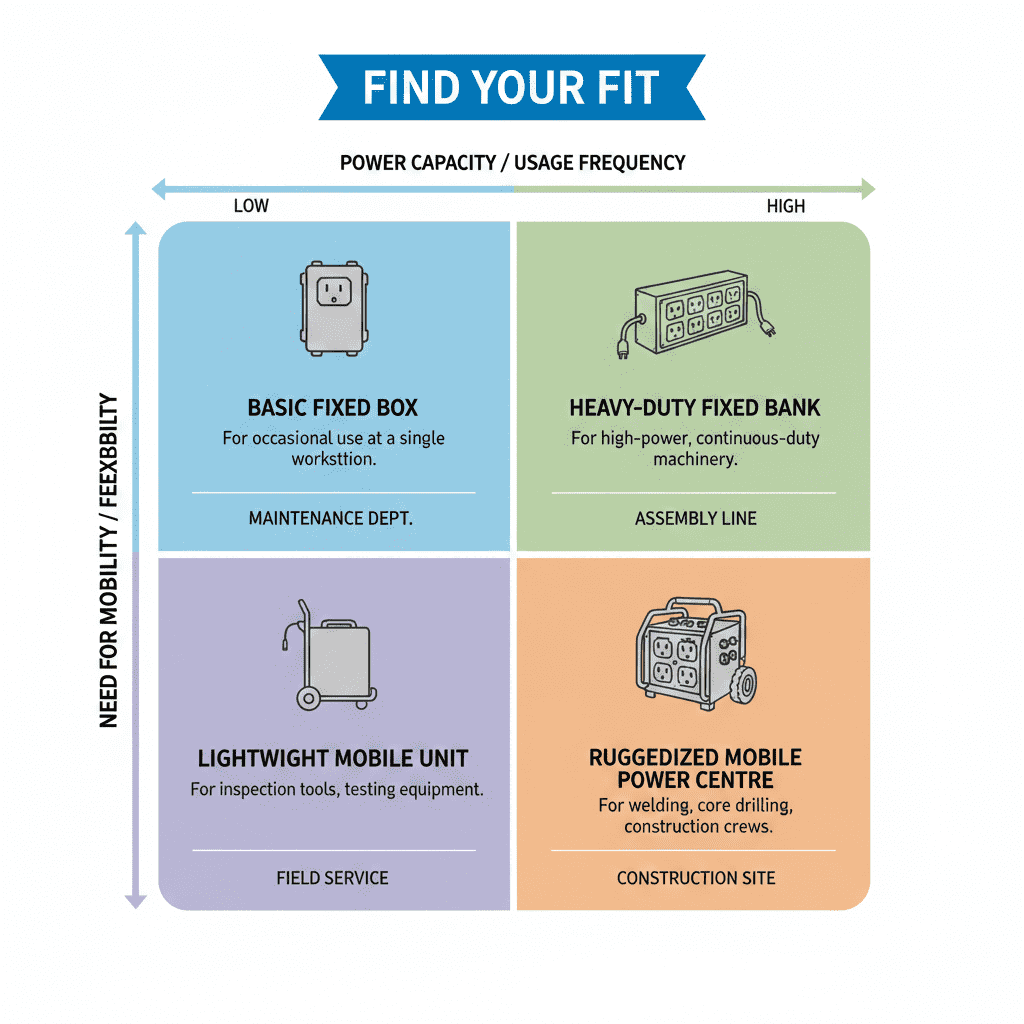
5. Step-by-Step Selection Process
5.1 Step 1: Audit Power Distribution Needs
- List all equipment to be powered: current draw, voltage, phase, and quantity.
- Calculate total load (add 20–30% for inrush current).
- Determine if equipment is stationary or mobile (frequency of relocation).
5.2 Step 2: Evaluate Operational Environment
- Assess exposure to dust, water, chemicals, or temperature extremes.
- Confirm indoor/outdoor deployment.
- Check safety and hygiene standards (e.g., FDA for food processing, OSHA for construction).
5.3 Step 3: Define Deployment Duration & Flexibility
- Temporary (<1 year): Prioritize mobile boxes for quick deployment and relocation.
- Permanent (>1 year): Opt for fixed boxes for durability and low maintenance.
- Hybrid: Combine both for mixed stationary/mobile needs (e.g., mining sites, large facilities).
5.4 Step 4: Compare Technical Specifications
- Match current/voltage ratings to total load.
- Select IP rating based on environment (IP65 for outdoor, IP69K for washdown).
- Choose number of outlets and socket types (CEE, Type A, Type I) for compatibility.
5.5 Step 5: Assess Safety & Compliance
- Ensure required protection features (RCD, circuit breakers, surge protection).
- Verify certifications match regional standards.
- Check for additional safety features (lockable lids, interlocks) based on use case.
5.6 Step 6: Analyze Cost & Scalability
- Compare upfront and long-term costs (installation, maintenance, replacement).
- Plan for future expansion (modular mobile boxes vs. expandable fixed systems).
Example Selection Workflow: A furniture factory needs power for 8 stationary woodworking machines (16A each, 230V AC single-phase) and 4 mobile tools (10A each). Environment: indoor, dusty (IP44+ required). Deployment: permanent (5+ years). Selection: Fixed socket box (16A, 230V AC, IP65 rating) with 8 outlets for machinery; 1 mobile socket box (16A, 230V AC, IP65 rating) for tools.
6. Installation & Maintenance Best Practices (Mobile vs. Fixed Industrial Socket Boxes)
6.1 Mobile Industrial Socket Boxes
- Installation:
- Place boxes on level, stable surfaces to prevent tipping.
- Use heavy-duty cables (10 AWG for 30A, 8 AWG for 50A) to avoid voltage drop.
- Secure cables with ramps or cable ties to prevent trip hazards and damage.
- Connect to compatible power sources (generator, fixed outlet) with twist-lock plugs for secure connection.
- Maintenance:
- Inspect cables weekly for wear, cuts, or fraying—replace immediately if damaged.
- Clean sockets monthly with a dry brush to remove dust/debris.
- Check circuit breakers and RCDs quarterly for proper functionality.
- Store boxes in sheltered areas when not in use to protect against weather damage.
6.2 Fixed Industrial Socket Boxes
- Installation:
- Hire certified electricians for hardwiring and conduit installation.
- Mount boxes at least 1.5m above ground (2m for washdown areas) to avoid water pooling and damage.
- Ensure proper grounding (PE) to prevent electric shock in harsh environments.
- Test all outlets and protection features before connecting equipment.
- Maintenance:
- Inspect housing and gaskets quarterly for cracks or wear—replace gaskets annually to maintain IP rating.
- Tighten terminal screws annually (0.8–1.5 N·m) to prevent loose connections.
- Test circuit breakers and RCDs semi-annually.
- Clean outlets with a dry brush or compressed air (no water) to remove dust/debris.
7. Troubleshooting Common Issues
7.1 Mobile Socket Box Issues
- Overload Tripping:
- Cause: Total load exceeds box capacity; undersized cables.
- Fix: Reduce connected equipment; upgrade to a higher-current box; use thicker-gauge cables.
- Loose Connections:
- Cause: Vibration during transport; improper plug insertion.
- Fix: Ensure plugs are fully inserted and locked; use twist-lock connectors; secure boxes to stable surfaces.
- Water Ingress:
- Cause: IP rating mismatch; damaged gaskets; improper cable gland installation.
- Fix: Upgrade to a higher-IP-rated box; replace gaskets; install IP-compatible cable glands.
7.2 Fixed Socket Box Issues
- Circuit Breaker Tripping:
- Cause: Equipment overload; short circuit; faulty protection feature.
- Fix: Disconnect and test equipment; inspect wiring for short circuits; replace faulty circuit breakers.
- Corrosion:
- Cause: Harsh environment (saltwater, chemicals); non-corrosive housing.
- Fix: Replace with stainless steel housing; apply anti-corrosion spray to terminals; upgrade to chemical-resistant gaskets.
- Poor Power Delivery:
- Cause: Loose terminal connections; undersized wiring; voltage drop.
- Fix: Retighten terminals; upgrade to larger-gauge wire; install voltage regulators for high-power equipment.
8. Conclusion & Reference Resources (Mobile vs. Fixed Industrial Socket Boxes)
Mobile and fixed industrial socket boxes are both critical to industrial power distribution, but their suitability depends on your specific needs. Mobile boxes offer flexibility for temporary, dynamic operations (construction, remote sites), while fixed boxes deliver reliability and high capacity for permanent, stationary equipment (manufacturing, processing plants). By aligning power requirements, environment, and deployment duration with each type’s strengths, you can optimize safety, efficiency, and cost-effectiveness.
Key takeaways:
- Mobile boxes: Best for temporary, mobile power needs (16A–63A, IP65+ rating, quick deployment).
- Fixed boxes: Ideal for permanent, high-power applications (63A+, IP44–IP69K, customizable protection).
- Hybrid systems: Combine both for mixed stationary/mobile needs (e.g., mining, large facilities).
- Prioritize IP rating, circuit protection, and compliance to ensure safety in harsh industrial environments.
- Proper installation and maintenance extend lifespan and prevent downtime.
Appendix: Key Reference Resources
- IEC 60309: Standard for Industrial Plugs, Sockets, and Couplers
- IEC 60529: IP Rating Classification Standard
- UL 498: North American Standard for Industrial Sockets
- OSHA 1910.303: Electrical Wiring Design and Protection Standards
- Schneider Electric: Mobile Industrial Socket Box Technical Datasheet
- ABB: Fixed Power Distribution Box Installation Guide
- National Electrical Code (NEC) Article 409: Industrial Control Panels
- IEC 60947-2: Circuit Breaker Standards for Industrial Use