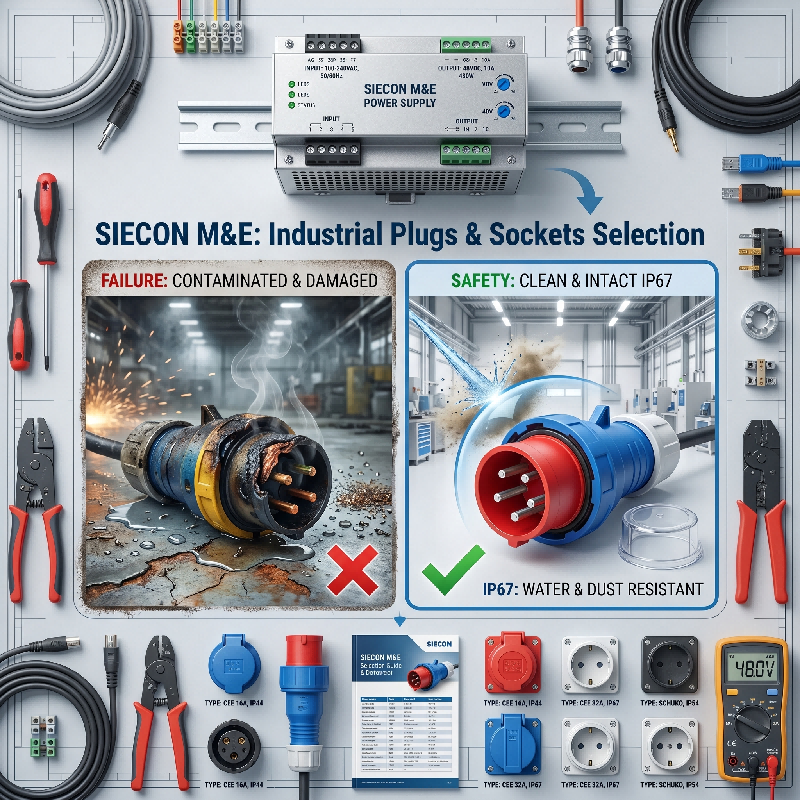
Introduction: Downtime Drains Your Profits Fast
Every minute of downtime costs your factory money. I am an electrical engineer with 15 years experience. I have solved thousands of industrial plug failure prevention. My work covers automotive, food, and heavy industries. This article shares five common failure patterns I saw. Each point includes a real case from my career. You will learn how to fix these problems permanently. Let us start saving your production line right now.
Poor Sealing Causes Ingress of Water and Dust
Your IP67 plug must keep water and dust out. I visited a car wash with weekly motor breakdowns. Water entered the plug and shorted the circuit. The plug’s rubber seal was pinched during installation. After one month, dust and water got inside. We replaced it with a pre-assembled sealed plug. The car wash had zero plug failures for six months. Always check the seal is flat and clean before use. Do not reuse seals that look squashed or cracked.
Loose Terminal Screws Lead to Overheating
Loose screws create high resistance and heat badly. A food plant had a fire scare from a melted plug. The 32A plug was running at only 20A load. But the terminal screw was never tightened fully. Over three months, vibration loosened it further. The heat melted the plastic housing slowly. We found the screw could turn by hand easily. After tightening all terminals to the correct torque, the plug ran cool. Always use a torque screwdriver for terminal connections. Re-tighten screws after the first 100 hours of use.
Incorrect Amperage Rating Causes Premature Failure
Using an under-rated plug is a very common mistake. A factory used 16A plugs for 25A welding machines. The plugs failed every two weeks without exception. The maintenance team blamed poor plug quality first. However, the real problem was the amperage mismatch. A 16A plug cannot handle 25A continuously. We upgraded all plugs to 32A rated models. Those same plugs are still running after 18 months. Always match the plug’s amp rating to your load. Add a 20% safety margin for continuous operation.
Mechanical Damage from Improper Handling
Industrial plugs get stepped on and driven over often. A construction site reported plug cracks every few days. Forklifts and heavy boots were crushing the plug bodies. The plastic housing would crack but not completely break. Moisture would then enter through these hidden cracks. The site switched to rubber-bodied industrial plugs instead. Rubber absorbs impacts without cracking like hard plastic. Additionally, we installed wall-mounted plug holders at chest height. This kept plugs off the floor entirely. Plug damage dropped by 90% after this simple change.
Corrosion of Pins in Harsh Environments
Chemical or salt air will corrode unprotected metal pins. A seaside desalination plant had intermittent power losses. The plug pins looked dull and slightly green. Corrosion added resistance and caused voltage drops. The plant’s desalination pumps would randomly shut down. Replacing the plugs solved the problem for only one month. We switched to nickel-plated or stainless steel pins instead. These materials resist salt and chemical corrosion effectively. Furthermore, we applied dielectric grease to every pin contact. The plugs have now worked reliably for over two years.
Conclusion: Fix These Issues and Stop Downtime
Downtime from plug failures is completely preventable today. You learned five failure modes with real case examples. Check your seals, terminals, amp ratings, mechanical protection, and pins. A 15-minute inspection now can save hours of downtime later. I have used these methods successfully across hundreds of factories. Start with your most critical machines first. Then apply the same fixes to the rest of your plant. Your production line will thank you with fewer stops.