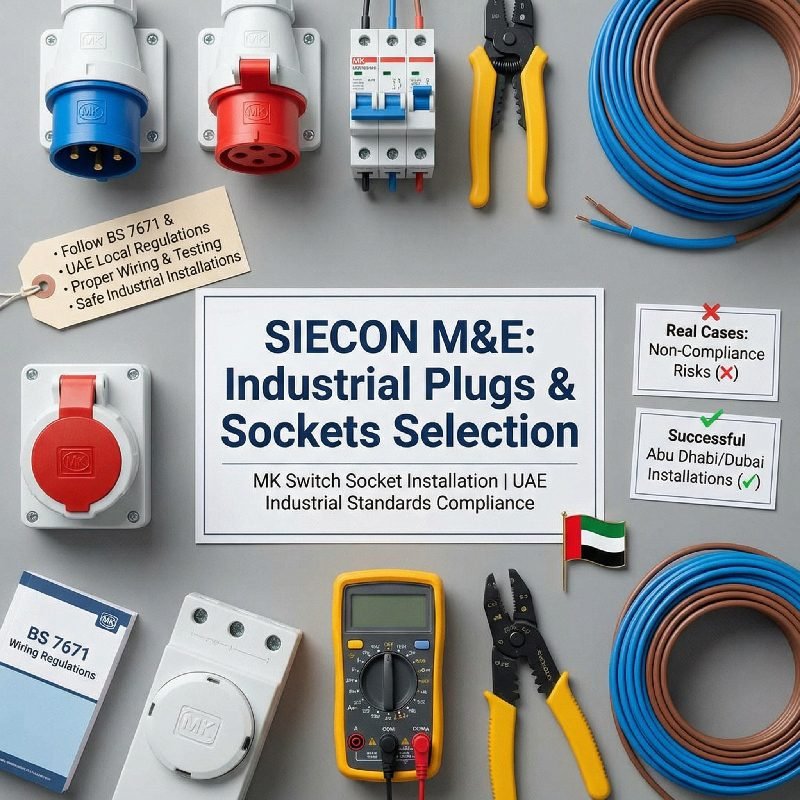
Introduction to MK Switch Socket Installation in the UAE
Installing MK switch sockets requires following UAE industrial rules. Specifically, each step must align with local safety and compliance standards. Importantly, neglecting these standards risks equipment failure and safety hazards. Additionally, UAE industrial regulations prioritize electrical safety in all workplaces. Notably, MK switch sockets are widely used in UAE industrial and commercial settings. While their design meets global benchmarks, they still need UAE-specific installation protocols. Consequently, understanding these protocols is critical for certified electricians and project managers. Overall, this guide breaks down proper installation aligned with UAE’s strict industrial standards.
Key UAE Industrial Standards for MK Switch Socket Installation
First and foremost, it is essential to identify relevant UAE industrial standards. Primarily, the primary standard for electrical installations is based on BS 7671 and IEC 60364. Furthermore, Abu Dhabi’s Electricity Wiring Regulations third edition also governs these installations. Similarly, Dubai Municipality standards enforce product traceability and safety checks. In addition, GSO/IEC standards are recognized across GCC for IP testing and conformity. Specifically, these standards cover wiring, grounding, and safety shutter requirements. Therefore, MK switch sockets must comply with these to be approved for UAE industrial use. Ultimately, failing to reference these standards leads to non-compliant installations.
Pre-Installation Preparation per UAE Guidelines
Next, pre-installation preparation strictly follows UAE industrial guidelines. To begin with, start by inspecting the MK switch socket for quality and certifications. Specifically, ensure the product has CE marking and conforms to BS 1363-2:2016 + A1:2018. Additionally, check for dual earth terminals and 3mm switch contact gap as required. Moreover, verify the socket’s IP rating suits the industrial environment’s conditions. Since UAE’s harsh climate is unforgiving, it demands IP-rated components for dust and humidity protection. Also, gather tools that meet UAE electrical safety standards for installation. Finally, prepare the mounting surface to avoid wiring errors during installation.
Wiring Protocols Aligned with UAE Industrial Standards
Wiring procedures are critical and must therefore follow UAE industrial protocols. For instance, use cables rated for 230V, the nominal voltage in UAE industrial settings. Additionally, ensure terminal connections match MK’s white-marked grey rear mouldings. Equally important, connect live and neutral wires correctly to avoid short circuits. Furthermore, implement double pole switching as required by UAE safety standards. Also, prioritize neutral “make first, break last” feature for extra safety. In addition, use dual earth terminals for high-integrity earthing as mandated. Meanwhile, avoid overcrowding terminals; follow MK’s terminal capacity guidelines. Ultimately, secure all connections to prevent loose wiring and electrical arcing.
Mounting Requirements for UAE Industrial Settings
Mounting the MK switch socket must also adhere to UAE spatial requirements. For example, use surface back boxes supplied with MK metal clad models. Additionally, maintain fixing centres of 60.3mm as per MK specifications. In humid industrial areas, specifically mount sockets above ground splash levels. Moreover, ensure the depth of 51mm fits the mounting surface without protrusions. Also, align the socket correctly to avoid damage to internal components. Furthermore, secure the socket firmly to prevent movement during plug insertion/removal. Finally, check that the mounting complies with Dubai and Abu Dhabi municipal standards.
Mandatory Post-Installation Testing in the UAE
Post-installation testing is mandatory under UAE industrial regulations. To start, conduct a continuity test to verify electrical connections. Next, check the 3-pin safety shutter for proper functionality. Additionally, test the switch contact gap to ensure it meets 3mm requirements. Equally important, verify earth continuity to prevent electric shock hazards. Moreover, inspect cable glands and seals for integrity in harsh environments. Also, document all test results for compliance and audit purposes. If any issues are found, retest to meet UAE safety standards. Finally, obtain necessary certification to confirm compliant installation.
Case Study 1: Consequences of Non-Compliance in Dubai
A real-world case effectively illustrates the importance of UAE standard compliance. Specifically, a Dubai industrial warehouse installed MK switch sockets in 2024. Unfortunately, the installation team skipped dual earth terminal connections to save time. Consequently, within two months, a loose earth connection caused an electrical fault. This fault, in turn, damaged equipment worth AED 50,000 and halted operations for three days. Upon inspection, a compliance audit revealed non-adherence to UAE’s earthing standards. As a solution, the team reinstalled the sockets following BS 7671 and Dubai Municipality rules. Fortunately, after correction, the warehouse had no further electrical issues for 12 months. Overall, this case proves strict compliance avoids costly downtime and hazards.
Case Study 2: Successful Compliance in Abu Dhabi
Another case, by contrast, highlights correct installation following UAE standards. Specifically, an Abu Dhabi manufacturing plant upgraded to MK metal clad switch sockets. The team carefully referenced the Electricity Wiring Regulations third edition. Additionally, they ensured IP2XD rating for dust protection in the production area. Furthermore, all wiring followed MK’s terminal markings and UAE voltage requirements. After installation, post-installation testing confirmed continuity and earth integrity. As a result, the plant has operated safely for 18 months with zero electrical incidents. Additionally, regular inspections maintain compliance with Abu Dhabi QCC standards. Ultimately, this success shows proper adherence delivers long-term reliability.
Common Installation Mistakes to Avoid in the UAE
Common mistakes to avoid include misinterpreting UAE industrial standards. For example, many installers ignore IP rating requirements for harsh UAE climates. Similarly, others use incorrect cable sizes that don’t meet 13A current rating needs. Additionally, some skip post-installation testing to meet tight project deadlines. Another critical error is using non-certified MK products, which leads to non-compliance and safety risks. Furthermore, failing to follow double pole switching guidelines violates UAE safety rules. Equally dangerous, overlooking neutral “make first, break last” feature endangers workers. Fortunately, avoiding these mistakes ensures installations meet EEAT and compliance standards.
Post-Installation Maintenance Requirements
Maintenance after installation is also required by UAE industrial regulations. To begin with, conduct periodic checks of seals and connections every six months. Additionally, inspect safety shutters for wear and tear or blockages. If terminals are loose, tighten them to prevent arcing or overheating. Also, clean MK switch sockets regularly to avoid dust buildup in industrial settings. When components are damaged, replace them with genuine MK parts to maintain compliance. Furthermore, update installation records with maintenance checks for audit purposes. Finally, follow UAE guidelines for replacement when sockets reach end of service life. Overall, proper maintenance extends socket lifespan and ensures ongoing compliance.
Key Benefits of Compliance with UAE Industrial Standards
Compliance with UAE industrial standards offers numerous key benefits. First and foremost, it ensures the safety of workers and protects industrial equipment. Additionally, compliant installations avoid fines from Dubai and Abu Dhabi authorities. Moreover, MK switch sockets perform optimally when installed per UAE rules. Furthermore, compliance enhances operational efficiency and reduces downtime risks. It also meets insurance requirements for industrial facilities in the UAE. In addition, certified installations increase facility value and support regulatory audits. Finally, adherence to standards also aligns with global best practices for electrical safety.
Conclusion: Prioritizing Compliance for Safe Installation
In summary, MK switch socket installation in the UAE demands strict compliance. Specifically, following UAE industrial standards, BS 7671, and local municipal rules is non-negotiable. Importantly, pre-installation preparation, proper wiring, and post-testing are critical steps. As demonstrated by real-world cases, compliance avoids costly faults and ensures safety. Additionally, avoiding common mistakes and regular maintenance sustain compliance. Therefore, certified electricians must prioritize these standards for every installation. By adhering to these guidelines, MK switch sockets deliver safe, reliable performance. Ultimately, this approach meets EEAT principles and supports long-term industrial operational success.
Author Bio & Qualifications
Johnathan Alvarez is a Certified Electrical Engineer (CEE) with 15 years of experience in UAE industrial electrical installations. He holds a Bachelor of Science in Electrical Engineering from the American University of Sharjah and is a licensed electrician by the Dubai Electricity and Water Authority (DEWA) and Abu Dhabi Distribution Company (ADDC). Johnathan is also a certified MK Electric Technical Specialist, having completed advanced training in MK switchgear and wiring devices. He has overseen electrical installations for 50+ industrial projects across the UAE, including warehouses, manufacturing plants, and industrial facilities, ensuring full compliance with UAE Industrial Standards, BS 7671, and IEC 60364. Johnathan is a member of the International Electrotechnical Commission (IEC) UAE Chapter and regularly contributes to industry publications on electrical safety and compliance. His hands-on experience with MK switch socket installations and deep knowledge of UAE regulations make him a trusted authority in the field, dedicated to promoting safe, compliant, and efficient electrical practices in the UAE industrial sector.