
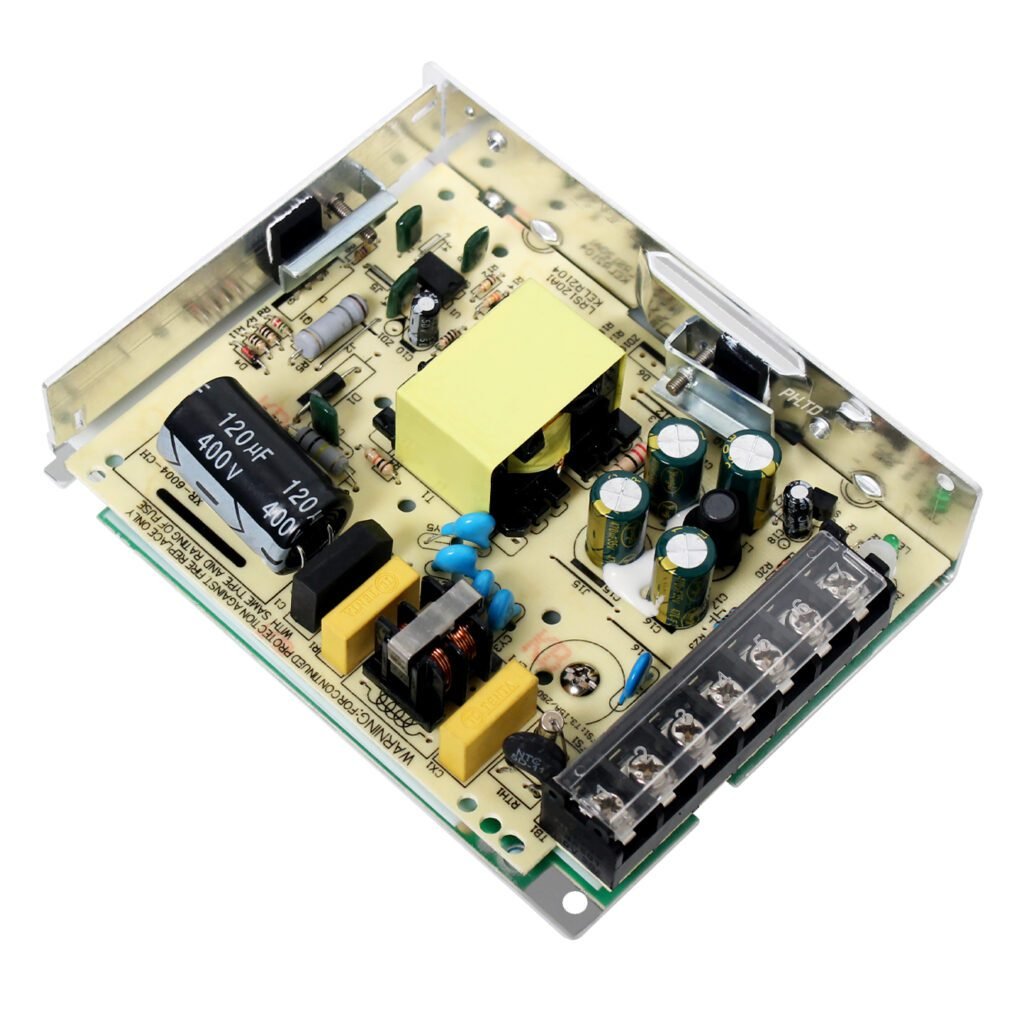
Introduction: LED Power Supply Voltage Selection Fundamentals
Selecting the appropriate LED power supply voltage—whether 24V or 12V—significantly influences lighting system performance, efficiency, and installation complexity. Consequently, this comprehensive guide examines voltage selection criteria while emphasizing the critical importance of wide input voltage 85-264VAC for global lighting applications.
1. Understanding Voltage Options: 24V vs 12V Systems
Fundamental Voltage Differences
LED power supply voltage selection begins with understanding core distinctions between 12V and 24V systems. Specifically, voltage choice affects multiple aspects including wiring requirements, efficiency, and installation scope, thereby influencing overall system design.
12V LED Power Supply Characteristics include traditional low-voltage standardization, common automotive and residential lighting applications, enhanced safety margins, and simpler voltage conversion requirements. Furthermore, these systems offer familiarity for residential installers.
24V LED Power Supply Advantages encompass higher efficiency for extended cable runs, reduced voltage drop challenges, lower current requirements for equivalent power, and increasing commercial adoption. Additionally, these systems demonstrate superior performance in larger installations.
Voltage Impact on System Design
Your LED power supply voltage decision directly influences several design parameters. Primarily, it determines wiring specifications, current calculations, safety implementations, and overall energy efficiency, thereby affecting both installation and operational phases.
2. Technical Performance Comparison
Efficiency Analysis
Power Loss Considerations reveal significant differences between systems. For instance, 12V systems require higher current for equivalent power, resulting in increased resistive losses. Conversely, 24V systems operate with half the current, achieving substantially lower power dissipation while improving overall efficiency.
Voltage Drop Calculations:
| Parameter | 12V System | 24V System | Advantage |
|---|---|---|---|
| Current (100W) | 8.33A | 4.17A | 24V: 50% less current |
| Voltage Drop (50ft) | 1.67V (14%) | 0.84V (3.5%) | 24V: 75% less drop |
| Power Loss | 13.9W | 3.5W | 24V: 75% less loss |
Installation and Wiring Comparison
Cable Requirements differ substantially between voltages. Whereas 12V systems typically require thicker gauge wires, 24V systems permit longer runs with equivalent wire sizes, thereby reducing material costs and installation complexity.
Connection Safety considerations favor both voltages since they fall within Safety Extra-Low Voltage (SELV) classifications. However, 12V systems offer marginally greater safety margins for direct contact applications, making them preferable for certain residential installations.
3. Global Compatibility: Wide Input Voltage Imperative
Universal Voltage Adaptation
Modern LED power supply voltage units must accommodate worldwide electrical standards. Therefore, the 85-264VAC input range provides essential universal compatibility across diverse power grids and regional variations, ensuring reliable global operation.
Regional Voltage Considerations vary significantly: North America typically uses 120VAC ±10% operation, Europe requires 230VAC ±10% compatibility, Asia features mixed 100V/220V system support, and industrial applications often demand 277VAC commercial lighting compatibility.
Technical Advantages
Voltage Fluctuation Tolerance represents a key benefit. Specifically, wide input ranges compensate for grid variations, brownout conditions, and brief surge events, ensuring consistent lighting performance regardless of electrical infrastructure quality.
Design Flexibility improves significantly with universal voltage acceptance. Consequently, manufacturers benefit from single-SKU production, while installers gain plug-and-play deployment capabilities across global markets, streamlining both manufacturing and installation processes.
Implementation Benefits
Manufacturing Efficiency increases through standardized production processes. Additionally, reduced testing requirements and simplified quality control contribute to overall cost optimization, making wide-input voltage units economically advantageous for large-scale production.
End-User Advantages include straightforward global deployment, elimination of voltage selector switches, and automatic adaptation to local electrical infrastructure. Moreover, these features reduce installation errors and improve system reliability across diverse geographical locations.
4. Application-Specific Recommendations
Commercial Lighting Applications
Office and Retail Lighting typically benefit from 24V LED power supply voltage selection. The primary reasons include longer cable runs and superior efficiency, making Siecon 24V constant voltage LED drivers ideal choices for these environments.
Warehouse and Industrial Lighting often requires 24V systems with wide input voltage capability. This combination ensures voltage stability in demanding environments while supporting global factory deployments through universal electrical compatibility.
Residential and Architectural Lighting
Home Lighting Systems frequently utilize 12V LED power supply voltage for its simplicity and adequacy in short-run applications. Common implementations include under-cabinet, accent, and decorative lighting installations where voltage drop is minimal.
Landscape and Outdoor Lighting generally favors 24V systems with waterproof designs. Since the higher voltage supports longer cable runs outdoors, IP67-rated units with wide voltage input ensure reliable performance in challenging environmental conditions.
Specialized Applications
Signage and Display Lighting typically requires 24V systems for uniform brightness. Because reduced voltage drop across large installations is essential, combined with 85-264VAC input capability, these systems support global deployment scenarios effectively.
Automotive and Marine Applications generally specify 12V systems for compatibility with standard vehicle electrical systems. Nonetheless, DC input options provide additional flexibility for specialized mobile or marine lighting requirements.
5. Installation Guidelines and Best Practices
Voltage Selection Process
Step 1: System Analysis involves calculating total LED wattage, measuring maximum cable distances, and identifying environmental conditions affecting performance. This foundational assessment informs subsequent decision-making processes.
Step 2: Voltage Decision follows specific guidelines: systems under 10A total current may consider 12V, whereas installations exceeding 10A or 50-foot runs typically benefit from 24V selection due to efficiency and voltage drop considerations.
Step 3: Power Supply Selection requires verification of 85-264VAC input range, proper wattage matching with 20% overhead, and confirmation of relevant safety certifications, ensuring compliance with international standards and local regulations.
Wiring Implementation
12V System Wiring demands heavier gauge wire (14-16 AWG) with limited run lengths to minimize voltage drop. Complementing this approach, appropriate fusing and circuit protection enhance system safety and longevity.
24V System Wiring permits lighter gauge conductors (18-20 AWG) with extended run capabilities. Nevertheless, proper circuit protection remains essential for safety and reliability despite the reduced current requirements.
Connection Methodology
Secure wire terminations prevent voltage drop issues, while standardized plug systems facilitate installation efficiency. When implementing daisy-chaining configurations, careful calculation of cumulative voltage drop ensures consistent performance across connected lighting elements.
6. Safety and Compliance Standards
Electrical Safety Requirements
Global Certifications must include UL/CUL for North America, CE marking for Europe, CCC for China, and PSE for Japan, ensuring comprehensive market accessibility and regulatory compliance across target regions.
Protection Features should encompass overcurrent prevention, short circuit shutdown, overvoltage component protection, and thermal overload safeguards, thereby creating multiple layers of system protection against electrical faults.
Installation Safety Protocols
12V Safety Advantages include reduced arc flash risk, minimized fire hazards, and simplified protection requirements for residential applications. Consequently, these systems offer accessible safety benefits for DIY and professional installations alike.
24V Safety Implementation, while still within SELV limits, requires proper insulation techniques and appropriate circuit protection for commercial installations. Therefore, professional installation is generally recommended for these systems.
7. Efficiency and Cost Evaluation
Energy Efficiency Comparison
Operational Efficiency typically favors 24V systems by 2-5% due to reduced resistive losses. Consequently, this translates to measurable annual energy cost savings, particularly in commercial applications with extended operating hours.
Heat Generation differs significantly: 12V systems produce more thermal output in wiring and connections, whereas 24V implementations demonstrate reduced heating characteristics, thereby lowering cooling requirements and improving component longevity.
Total Ownership Cost Analysis
Initial Costs vary between systems: 12V power supplies often carry lower price points, while 24V units may require higher quality components but reduce copper wiring expenses through smaller conductor requirements.
Operational Costs reveal 24V advantages through reduced energy consumption. However, both systems demonstrate similar maintenance requirements with quality components, making initial quality selection crucial for long-term reliability.
Five-Year Cost Analysis:
| Cost Component | 12V System | 24V System | Savings |
|---|---|---|---|
| Initial Equipment | $ | $$ | 12V advantage |
| Wiring Installation | $$ | $ | 24V saves 30% |
| Annual Energy | $$$ | $$ | 24V saves 15% |
| 5-Year Total | $$$$$ | $$$$ | 24V saves 10-20% |
8. Future Technology Trends
Voltage Standardization Evolution
Commercial adoption increasingly favors 24V as the emerging standard. Simultaneously, smart lighting integration drives higher voltage requirements for IoT capabilities, while global harmonization makes wide input voltage virtually mandatory for international products.
Technological Advancements
Higher efficiency drivers now achieve 95%+ performance levels, whereas dimming compatibility expands across both voltage ranges. Furthermore, smart monitoring features incorporate voltage tracking and performance reporting capabilities, enhancing system intelligence.
Environmental Considerations
Energy standards continue tightening efficiency requirements. Meanwhile, material optimization reduces copper usage through higher voltage systems, and recyclability improvements advance across both voltage platforms, supporting sustainable lighting solutions.
9. Frequently Asked Questions (FAQ)
Q1: Which voltage offers greater safety: 12V or 24V LED systems?
A: Both voltages fall within Safety Extra-Low Voltage (SELV) classifications, making them safe for most applications. Although 12V provides slightly greater safety margins, properly installed 24V systems meet all safety requirements for lighting installations when implemented correctly.
Q2: How does 85-264VAC input range benefit real-world installations?
A: Wide input voltage enables global deployment without modification, handles grid fluctuations effectively, simplifies inventory management, and ensures reliable operation under diverse power conditions. Therefore, it represents a crucial feature for modern lighting systems.
Q3: Can 12V and 24V LEDs operate within the same system?
A: Direct operation isn’t possible without separate power supplies. Although voltage converters enable mixing, they increase system complexity and cost, making dedicated voltage systems generally preferable for reliability and performance consistency.
Q4: What consequences follow incorrect voltage selection?
A: Insufficient voltage causes dim or non-functional LEDs, while excessive voltage rapidly damages LED components. Consequently, precise voltage matching remains essential for optimal performance, longevity, and warranty protection.
Q5: How should I calculate appropriate power supply sizing?
A: Multiply total LED wattage by 1.2 (20% overhead) for minimum power supply requirements. Additionally, consider future expansion possibilities during the sizing process to accommodate potential system growth without requiring complete replacement.
Q6: Are 24V LED systems more expensive overall?
A: Initial costs may be slightly higher, but 24V systems typically deliver lower total ownership costs through reduced wiring expenses and improved energy efficiency over operational lifetimes. Thus, they often provide better long-term value.
Q7: Can voltage doublers enable 12V power supplies for 24V LEDs?
A: While technically possible, voltage doublers reduce system reliability, increase complexity, and compromise efficiency. Therefore, they’re generally inadvisable for quality lighting installations where performance and longevity are priorities.
10. Troubleshooting Common Issues
Voltage Drop Challenges
Symptoms include progressive dimming along cable lengths, color temperature variations, and inconsistent brightness across installations. These issues typically worsen with longer cable runs or undersized conductors.
12V System Solutions involve increasing wire gauge, reducing run lengths, or adding supplemental power supplies at strategic locations. Alternatively, redesigning circuit layouts may distribute loads more effectively.
24V System Solutions, while less frequently needed, still require proper wire sizing and consideration of active voltage regulation for extensive installations. Regular voltage testing helps identify developing issues before they affect lighting quality.
Power Supply Failures
Common Causes encompass overloading beyond rated capacity, voltage spikes without adequate protection, and thermal overheating from insufficient ventilation. Environmental factors like dust accumulation can also contribute to premature failures.
Prevention Strategies include proper sizing with performance margins, surge protection device implementation, and ensuring adequate ventilation around power supplies. Moreover, regular maintenance inspections help identify potential issues early.
Compatibility Concerns
LED Flickering often results from inadequate power supply capacity, voltage instability, or dimmer compatibility issues requiring specific driver matching. Sometimes, electromagnetic interference from nearby equipment causes similar symptoms.
Color Consistency problems may stem from voltage variations affecting LED performance, poor quality power supplies, or inadequate current regulation mechanisms. Consequently, using matched components from reputable manufacturers minimizes these issues.
Conclusion: Optimal Voltage Selection Strategy
Choosing between LED power supply voltage options requires balanced consideration of application requirements, installation parameters, and performance expectations. Therefore, systematic evaluation ensures optimal system design and long-term satisfaction.
Final Recommendations:
Select 12V LED Power Supply When:
Cable runs remain under 20 feet
Total power requirements stay below 100W
Compatibility with existing 12V systems is essential
Maximum safety margins represent primary priorities
Choose 24V LED Power Supply When:
Longer cable runs or larger installations are planned
Power requirements exceed 100W
Commercial or industrial applications are intended
Energy efficiency optimization is desired
Essential Requirement:
Regardless of output voltage selection, always specify wide input voltage 85-264VAC capability. This feature ensures global deployment flexibility, grid fluctuation tolerance, future-proof installation readiness, and simplified inventory management across diverse markets.
Implementation Methodology:
Analyze specific lighting requirements comprehensively through technical assessment
Calculate power needs and cable distances accurately using industry-standard formulas
Select voltage based on technical requirements objectively rather than personal preference
Verify wide input voltage compatibility thoroughly before final component selection
Implement with proper safety and efficiency practices consistently throughout installation
Technical Support Available: Contact our lighting specialists for personalized LED power supply voltage recommendations. We provide detailed application analysis, product selection guidance, and comprehensive technical documentation to ensure optimal lighting system performance with global compatibility assurance.