About the Author
Marcus R. Hale is a Licensed Master Electrician with 28 years in industrial electrical design, installation, and code compliance. He holds certifications in NEC, OSHA, NECA, and IEC 60204‑1, and has led conduit installations for manufacturing plants, warehouses, and automation facilities across North America. Additionally, he serves as a technical trainer for electrical contractors and has authored 11 industrial wiring guides used in vocational programs. His hands‑on project experience includes designing conduit systems for 35+ industrial facilities, thereby ensuring safety, efficiency, and long‑term reliability.
Industrial electrical conduit is a rigid or flexible protective tubing system that shields wires and cables in harsh industrial environments. Specifically, it prevents physical damage, moisture ingress, and electromagnetic interference while supporting safe and organized cable routing. Moreover, conduit systems are mandatory in most industrial settings to meet safety codes and extend wiring lifespan. Proper selection and installation, furthermore, reduce downtime, lower maintenance costs, and protect personnel from electrical hazards. Ultimately, every industrial conduit installation must follow local electrical codes and global safety standards for full compliance.
What Is Industrial Electrical Conduit?
Industrial electrical conduit is a durable pathway that protects and routes electrical conductors in factories and plants. Primarily, it separates live wiring from moving parts, moisture, chemicals, and physical impact in demanding work areas. Additionally, conduit also acts as an equipment grounding path in metallic systems to improve overall electrical safety. It also supports future wire replacement or upgrades without major renovation, thus lowering long‑term facility costs. Unlike open wiring, however, conduit limits fire spread and contains sparks in flammable or dusty industrial zones.
Core Types of Industrial Electrical Conduit
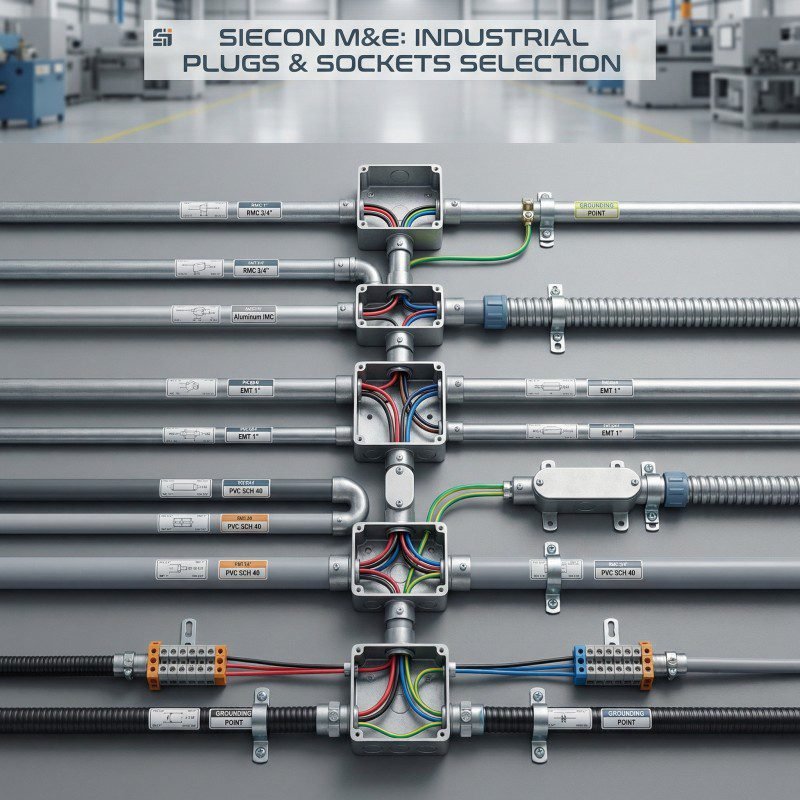
Rigid Metal Conduit (RMC) is a heavy‑walled steel or aluminum tube for extreme industrial protection. First and foremost, it provides maximum impact resistance and serves as a dependable equipment grounding conductor. Consequently, RMC is ideal for outdoor areas, heavy machinery, and exposed locations in manufacturing plants. Furthermore, it is threaded for secure connections and supports high structural loads in industrial construction.
Intermediate Metal Conduit (IMC) is a lighter but strong alternative to RMC for general industrial use. In contrast to RMC, it offers good mechanical protection while being easier to handle and install than rigid steel conduit. Additionally, IMC is compatible with standard fittings and meets code for most indoor industrial applications. As a result, it is widely used in control panels, machinery bases, and light industrial equipment setups.
Electrical Metallic Tubing (EMT) is a thin‑walled steel conduit for dry indoor industrial environments. Notably, it is cost‑effective, lightweight, and easy to bend for custom routing in electrical cabinets. EMT is also non‑threaded and uses compression or set‑screw fittings for fast assembly. Therefore, it is common in control rooms, automation systems, and light industrial wiring setups.
Rigid PVC Conduit is a non‑metallic tube resistant to corrosion, moisture, and chemical exposure. Specifically, it is widely used in food processing plants, wastewater facilities, and corrosive industrial zones. Unlike metallic conduits, PVC does not conduct electricity and requires no grounding beyond standard wiring practices. Additionally, it is available in Schedule 40 and Schedule 80 grades for different pressure and impact needs.
Liquid‑Tight Flexible Metal Conduit (LFC) is a flexible metal tube with a waterproof plastic jacket for wet areas. Importantly, it absorbs vibration and connects moving parts such as motors, pumps, and robotic arms. Thus, LFC is suitable for machinery with frequent movement or exposure to oils and coolants. Moreover, it maintains protection while allowing limited motion in dynamic industrial systems.
Electrical Nonmetallic Tubing (ENT) is a flexible plastic conduit for indoor concealed industrial routing. It is lightweight, easy to install, and ideal for pre‑cast walls and raised floors, for example. ENT is also resistant to moisture and chemicals but not recommended for exposed or high‑impact areas. As such, it simplifies wiring in modular industrial buildings and retrofit projects.
Key Selection Factors for Industrial Conduit
Choose conduit based on environmental exposure to moisture, chemicals, temperature, and physical impact first. Next, consider installation location, including indoor, outdoor, underground, or overhead routing requirements. Additionally, evaluate wiring flexibility needs for moving machinery or future cable modifications. Furthermore, check compliance with NEC, IEC, OSHA, and local industrial safety regulations. Finally, factor in cost, installation speed, and long‑term durability for total lifecycle value.
Real‑World Industrial Case Study: Automotive Plant Conduit Upgrade
A 2024 automotive assembly plant replaced old wiring with a mixed conduit system for 400+ motors and sensors. To begin with, the team used RMC for outdoor equipment pads and high‑impact production line zones. Then, IMC and EMT were installed in control cabinets and dry indoor assembly areas to balance cost and protection. Meanwhile, LFC connected robotic welders and moving conveyor sections to absorb vibration and prevent cable fatigue. Additionally, PVC conduit routed wiring through chemical wash bays and corrosive paint booth areas safely. As a result, the project reduced unplanned downtime by 32% and cut annual maintenance costs by $47,000. Finally, inspectors noted full compliance with NEC Article 342 and industrial safety standards.
Standard Industrial Conduit Installation Practices
Start with a detailed layout that marks mounting points, bends, junction boxes, and pull points for efficiency. First, measure and cut conduit to precise lengths to avoid waste and ensure clean, professional connections. Then, deburr cut ends to prevent wire insulation damage during pulling and installation. Next, use appropriate bending tools for smooth curves that meet minimum radius requirements. Additionally, secure conduit with proper straps and hangers at code‑specified intervals to support weight. Also, install seal‑tight connectors in wet or dusty areas to maintain environmental protection. Furthermore, ground metallic conduits properly to meet equipment grounding requirements in industrial systems. Finally, label all conduits, circuits, and junction boxes for safe maintenance and future upgrades.
Bending and Routing Best Practices
Follow minimum bend radius rules to avoid wire damage and ensure easy pulling during installation. For instance, use factory‑made elbows for tight spaces or high‑stress industrial routing points. Also, plan horizontal and vertical runs to minimize the number of bends between pull boxes. Additionally, maintain clearances from heat sources, moving parts, and sharp edges in industrial setups. Moreover, align conduit runs with structural steel to improve stability and reduce physical stress.
Underground Conduit Installation for Industrial Sites
Use Schedule 80 PVC or coated RMC for underground industrial power and control wiring. First, install conduit at code‑required depths to resist vehicle loads and soil pressure in yards. Then, use concrete encasement for high‑traffic areas or locations with heavy equipment movement. Additionally, install expansion fittings to compensate for soil settlement and temperature changes outdoors. Finally, seal all underground fittings to block water, dirt, and pests from entering conduit systems.
Safety and Compliance in Industrial Conduit Work
All installations must follow NEC, OSHA, and local industrial electrical codes for legal compliance. First, use proper personal protective equipment during cutting, bending, and mounting of conduit materials. Also, ensure adequate grounding and bonding for metallic conduits to prevent shock hazards. Furthermore, do not exceed fill ratios for safe heat dissipation and easy wire pulling. Finally, perform post‑installation inspections to verify tight connections and correct positioning.
Maintenance and Troubleshooting Industrial Conduit Systems
Inspect fittings and supports quarterly to fix loose parts before they cause failures or hazards. Additionally, clear dust, debris, and moisture from conduit openings and junction boxes regularly. Also, check for corrosion, cracks, or physical damage in harsh industrial zones. Moreover, test grounding continuity to ensure safety and code compliance in metallic systems. Finally, replace damaged sections immediately to avoid unplanned downtime in production.
Conclusion
Industrial electrical conduit is a critical component for safe, reliable wiring in factories and automation sites. Importantly, choosing the right type and following proper installation practices protect equipment and personnel. Furthermore, real‑world case studies show that quality conduit systems reduce costs and improve uptime significantly. Additionally, compliance with codes and standards ensures long‑term performance and reduces liability risks. Ultimately, this guide supports engineers, contractors, and maintenance teams in designing robust industrial conduit systems.