Introduction: The Crisis Has Reached a Critical Point
Global supply chains are under unprecedented pressure right now. Fuel prices have risen by over 100 percent recently. Shipping routes face disruptions from geopolitical conflicts worldwide. These problems are affecting every industry without exception. However, electrical components are facing the most severe shortages. Transformers, switchgear, and industrial plugs are now critical items. Factories cannot operate without these basic electrical parts. Let me explain why this crisis is different from past disruptions. I will also tell you how to protect your supply chain today.
The Numbers That Reveal the Crisis Depth
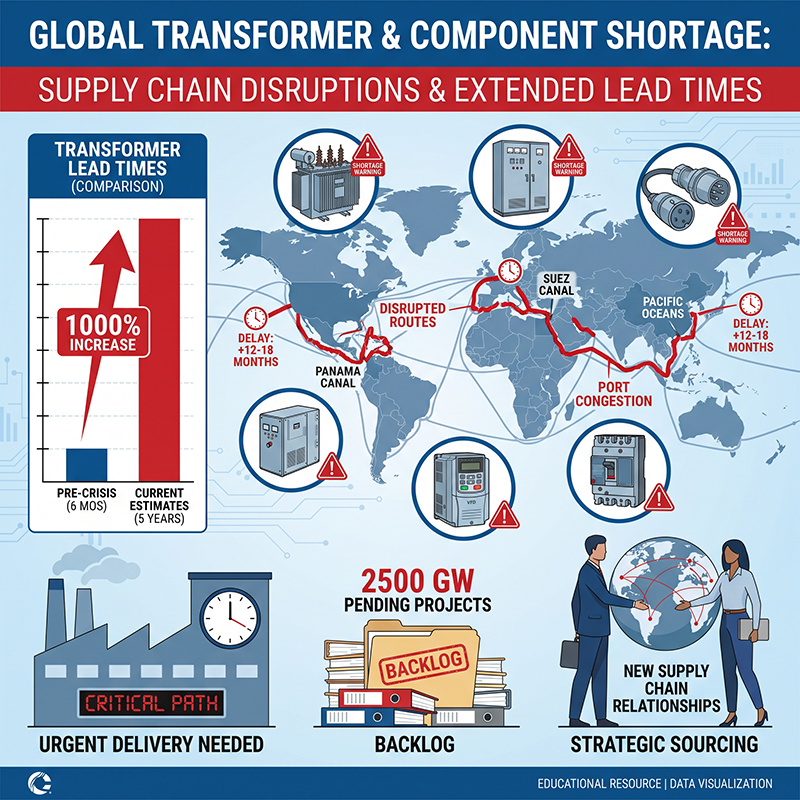
Transformer lead times have stretched from 6 months to 5 years. US imports of Chinese transformers grew by 182 percent recently. Approximately 2500 gigawatts of projects are stuck waiting for equipment. Global freight costs remain three times higher than pre-crisis levels. Shipping delays add 4 to 8 weeks to normal delivery times. Container availability is still unpredictable across major trade routes. These numbers are not improving despite industry efforts. The crisis is structural, not temporary in any way. Electrical components sit at the center of this perfect storm.
Why Electrical Components Are Hit So Hard
Electrical components require specialized materials that are hard to source. Electrical steel comes mainly from a few countries only. Copper prices have remained volatile throughout the crisis period. Semiconductor shortages affect even simple electrical devices. Transformer factories closed during years of low demand previously. Rebuilding that manufacturing capacity takes many years to complete. Meanwhile, demand for electrical equipment has surged dramatically. AI data centers need massive amounts of power components. Renewable energy projects require grid connection transformers. The supply-demand gap keeps widening every single month.
Real Case: A Factory That Almost Shut Down
A food processing plant in the Midwest called me for help. Their main transformer failed without any warning at all. The plant would have to shut down within 48 hours normally. Their usual supplier quoted a 52 week delivery for replacement. That timeline would have ruined their entire production schedule. I found a certified manufacturer with a transformer in stock. The unit was air freighted to the plant within 10 days. The plant avoided a shutdown that would cost millions. This story shows how critical electrical components have become. A single transformer can determine whether a factory runs.
How the Crisis Is Reshaping Supply Chains
Buyers are no longer choosing suppliers based on price alone. Delivery reliability has become the most important factor now. Many companies are reducing their dependence on single sources. Regional and local suppliers are gaining new importance rapidly. Inventory strategies are shifting from just-in-time to just-in-case. Safety stock levels for critical components have increased significantly. Longer-term contracts are replacing spot buying for many items. Supplier verification and auditing have become standard practice. These changes represent a fundamental shift in procurement thinking.
Which Components Face the Longest Lead Times
Large power transformers have the most severe delivery delays currently. Medium-voltage switchgear is also taking much longer to produce. Industrial plugs and connectors are facing raw material constraints. VFDs remain affected by the ongoing semiconductor shortage. Circuit breakers have variable lead times depending on amperage. Cast resin dry-type transformers are in particularly high demand. Components with specialized copper windings are hardest to source. Buyers should prioritize these items in their procurement planning. Lead times will not return to normal anytime soon.
What Smart Buyers Are Doing Differently Now
First, they are placing orders at least 12 months before needing delivery. Second, they are using multiple suppliers across different countries. Third, they are stocking critical spare components for essential equipment. Fourth, they are working with supply chain consultants who know the market. Fifth, they are paying higher prices to secure guaranteed delivery slots. Sixth, they are simplifying specifications to use more available components. Seventh, they are building direct relationships with certified manufacturers. Eighth, they are monitoring geopolitical developments that could affect shipping. These strategies are helping successful buyers navigate the crisis.
The Opportunity for Electrical Component Suppliers
The current crisis creates real opportunities for prepared suppliers. Certified manufacturers with available capacity are in high demand. Companies that can deliver quickly are winning new customers. Regional suppliers are gaining market share from distant sources. Quality and reliability matter more than the lowest price now. Suppliers with strong logistics capabilities have a major advantage. Those who invest in inventory will capture the most business. The crisis will eventually end, but new relationships will last. Smart suppliers are positioning themselves for long-term growth.
How to Secure Your Electrical Component Supply
Start by identifying your most critical electrical component needs. List every transformer, switchgear, and plug you depend on. Determine your acceptable lead time for each component category. Then begin searching for multiple qualified suppliers immediately. Verify each supplier‘s certifications and quality control processes. Place trial orders before committing to larger quantities. Build safety stock for components with the longest lead times. Maintain regular communication with all your approved suppliers. Review your supply chain strategy at least every quarter. These steps will protect your operations during this crisis.
Conclusion: Electrical Components Are Now Critical Infrastructure
The global supply chain crisis is not ending anytime soon. Electrical components have become essential to modern industrial operations. Transformers, switchgear, and industrial plugs keep factories running. Smart buyers are changing their sourcing strategies to adapt. Suppliers who deliver reliably are capturing new market share. Do not wait for the crisis to worsen before taking action. Secure your electrical component supply chain starting today.