
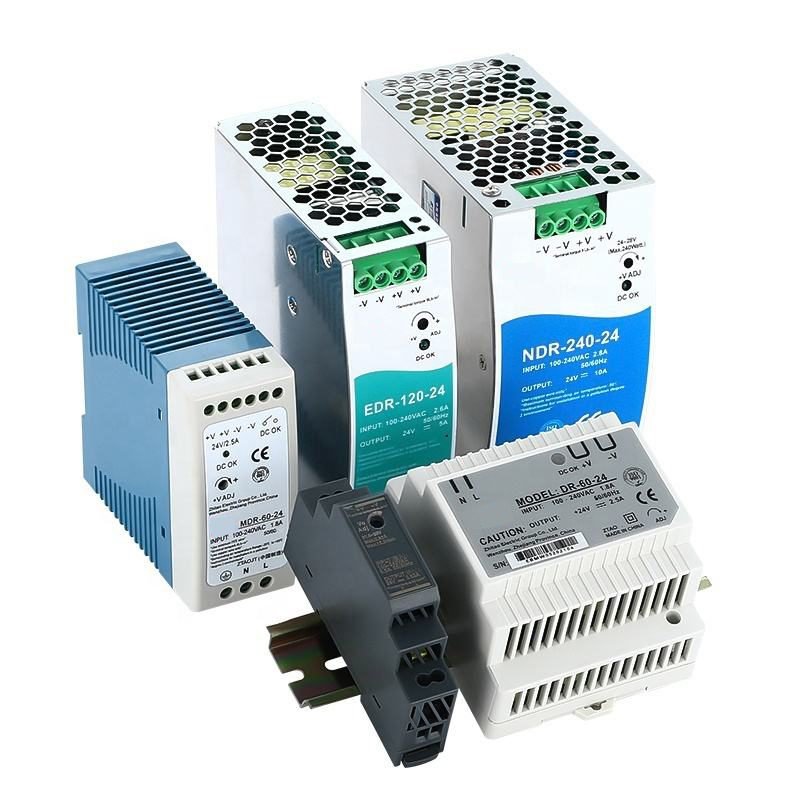
Introduction: Power Supply as the Heart of Automation Cabinets
Selecting the proper power supply for industrial automation cabinets represents one of the most critical decisions in control system design. Consequently, as the central power distribution point for PLCs, sensors, actuators, and communication devices, the power supply’s reliability directly impacts overall system uptime and performance. Therefore, this comprehensive guide explores key considerations for choosing the optimal power supply for industrial automation applications, balancing technical requirements, environmental factors, and operational demands.
1. Understanding Industrial Automation Power Requirements
Standard Voltage Requirements
Industrial automation systems universally rely on 24V DC power as the standard voltage for control circuits. This standardization simplifies component compatibility while simultaneously providing adequate power with enhanced safety compared to higher voltages.
Typical Load Distribution in Automation Cabinets:
| Component Type | Current Consumption | Power Characteristics | Criticality |
|---|---|---|---|
| PLC CPU | 0.5-3A @ 24V | Continuous, stable required | High |
| Digital I/O Modules | 0.1-2A per module | Variable, surge currents | Medium-High |
| Analog Modules | 0.2-0.5A per module | Sensitive to noise | High |
| Communication | 0.5-1.5A per device | Continuous operation | High |
| HMI Panels | 1-4A @ 24V | Display backlight varies | Medium |
| Safety Circuits | 0.5-2A @ 24V | Must never fail | Critical |
Power Calculation Methodology
Comprehensive Load Analysis requires systematic calculation involving several steps.
Step-by-Step Calculation Process:
List All Components: First, create a complete inventory of powered devices
Determine Base Current: Next, sum all continuous current requirements
Add Inrush Currents: Additionally, account for motor starters and capacitor charging
Consider Duty Cycles: Subsequently, factor intermittent versus continuous operation
Apply Safety Margin: Then, add 20-30% for future expansion and aging
Calculate Total: Finally, determine final power supply rating
Calculation Formula Example:
Total Current = Σ(Continuous Currents) +
                Σ(Inrush Currents × Duty Factor) +
                Safety Margin (20-30%)
Critical Load Characteristics
Sensitivity Factors to Consider include voltage stability where PLCs require ±5% voltage tolerance maximum, noise immunity as analog circuits need <100mV ripple, transient response capability to handle 50% load steps within 100ms, and hold-up time of minimum 20ms during power interruptions.
2. DIN Rail Power Supply Selection Criteria
Technical Specifications
Input Voltage Requirements encompass several aspects. Specifically, wide range input of 85-264VAC ensures global compatibility, while three-phase options (380-480VAC) suit large installations. Furthermore, DC input capability (120-370VDC) supports DC systems, and frequency range acceptance of 47-63Hz meets standard requirements.
Output Performance Standards demand careful attention. Typically, voltage accuracy should maintain ±1% regulation, while load regulation must stay below 1% change from 10-100% load. Moreover, efficiency targets of 88-95% achieve energy savings, and power factor should exceed 0.9 with active PFC.
Protection Features (Essential) provide critical safety measures. Overvoltage protection triggers automatic shutdown above 28V, whereas overcurrent protection offers current limiting with auto-recovery. Similarly, short circuit protection ensures immediate response and reset, while over temperature protection prevents thermal damage. Additionally, surge protection includes built-in surge suppression.
Environmental Specifications
Temperature Performance requirements vary by application. Standard range operation spans -25°C to +70°C, while extended ranges reach -40°C to +85°C for harsh environments. Storage temperature should maintain -40°C to +85°C conditions, with derating requirements typically applying 2.5%/°C above 50°C.
Industrial Durability factors include vibration resistance of 5-10g for machinery applications, shock resistance up to 30-50g for transportation, humidity tolerance of 20-90% non-condensing, and contaminant protection with IP20 minimum (higher if exposed).
Reliability Metrics
Quality Indicators encompass several measurable parameters. Mean Time Between Failures (MTBF) should exceed 100,000 hours at 40°C, while design life typically reaches 10-15 years industrial service. Furthermore, component quality requires industrial-grade capacitors and semiconductors, and testing standards include burn-in testing and quality control procedures.
Certification Requirements ensure compliance and safety. Safety standards include UL 508, IEC 62368-1, and EN 60950-1, while industrial standards feature UL 508 for industrial control. Additionally, EMC compliance involves EN 55032, EN 61000-3-2, and EN 61000-6-2 standards, and regional certifications require CE, UKCA, or CCC as necessary.
3. Cabinet Layout and Thermal Management
Optimal Power Supply Placement
Strategic Positioning Considerations involve several factors. Proximity to loads minimizes voltage drop to critical components, whereas ventilation access ensures adequate airflow for cooling. Moreover, service accessibility allows maintenance without cabinet evacuation, and heat distribution planning avoids creating hot spots.
Recommended Cabinet Zones follow logical organization:

[Top Section]
- Communication Equipment
- Network Switches

[Middle Section]
- Power Supplies (Primary)
- PLC and Controllers

[Lower Section]
- Motor Starters
- High Current Devices

[Bottom Section]
- Terminal Blocks
- Cable Entry
Thermal Management Strategies
Natural Convection Cooling principles include vertical mounting for optimal heat dissipation, clearance requirements of 50mm minimum above/below units, spacing between units of 10-20mm for airflow, and orientation with heat sink fins vertical for best convection.
Forced Air Considerations require careful planning. Air flow direction should move bottom to top for natural heat rise, while filter maintenance needs regular attention for dust control. Additionally, temperature monitoring involves cabinet temperature sensors, and fan redundancy utilizes dual fans for critical applications.
Heat Load Calculation follows this formula:
Total Heat Dissipation = Σ(Power Supply Losses) +
                         Σ(Component Losses) +
                         Ambient Heat Gain

Power Supply Loss = Output Power × (1 - Efficiency)
Cable Management for Power Distribution
Power Distribution Best Practices include separating power levels to keep 24V, 120/230V, and communication separate, using proper wire sizing with adequate gauge for current and distance, managing voltage drop to stay below 3% total, and implementing single point grounding to minimize noise.
Connection Methods vary by application. Terminal blocks suit permanent installations, whereas plug connectors work for modular systems. Similarly, power distribution blocks handle multiple outputs, and bus bars serve high current applications effectively.
4. Redundancy and Reliability Configurations
Redundancy Strategies
Parallel Redundancy (N+1) features multiple units sharing load with the advantage of continuous operation during single failure. Implementation involves automatic load sharing or diode isolation, typically used in critical processes requiring zero downtime.
Hot Standby Configuration employs primary/backup arrangements with one active unit and one monitoring. Switchover occurs automatically during failure, providing the advantage of no interruption. Monitoring continuously checks status for reliability assurance.
Dual Input Systems utilize separate sources with independent power inputs. Automatic selection chooses the best available source, offering protection against source failure through automatic transfer switches.
Reliability Enhancement Features
Monitoring and Diagnostics capabilities include status indicators with LED signals for operation and faults, remote monitoring through communication interfaces (PROFINET, Ethernet/IP), predictive maintenance using temperature and performance trending, and alarm outputs with dry contacts for remote alarming.
Maintenance Features facilitate system upkeep. Hot-swap capability enables replacement without system shutdown, while modular design allows easy component replacement. Furthermore, front access permits service without cabinet access, and test points provide voltage and current measurement capabilities.
System Integration Considerations
PLC Integration connections include status monitoring through PLC digital inputs, performance data via analog inputs for voltage/current, control integration with remote on/off capability, and alarm integration connecting to plant alarm systems.
SCADA/HMI Integration features visualization for real-time status display, historical data with performance trending and logging, alarm management through centralized alarm handling, and reporting with automated performance reports.
5. Product Selection by Application Type
Machine Control Cabinets
Requirements include compact design for space-optimized machinery, vibration resistance for moving equipment, wide temperature operation for factory floor conditions, and quick response for fast transient response with motors.
Recommended Products feature Siecon MachinePro Series with compact DIN rail design. Specifications include 24V/5A-20A options, IP20 rating, -25°C to +70°C operation, enhanced vibration resistance, and PLC-ready integration with monitoring outputs.
Process Control Cabinets
Requirements demand high reliability for continuous operation, redundancy through N+1 or hot standby configurations, precision with excellent voltage regulation, and monitoring with comprehensive diagnostic capability.
Recommended Configuration includes primary system using Siecon ProcessPower 24V/10A, redundant unit with identical backup, monitoring module for performance tracking, and distribution through isolated output channels.
Distributed I/O Cabinets
Requirements necessitate multiple outputs for distributed devices, wide temperature operation for remote locations, network monitoring capability through communication interfaces, and enhanced surge protection.
Product Features incorporate multi-output design with independent 24V outputs, communication via Ethernet or fieldbus interface, environmental protection with IP54 for harsh locations, and diagnostics for remote fault detection.
Safety System Cabinets
Critical Requirements demand highest reliability for safety system integrity, isolated outputs to prevent fault propagation, continuous self-testing through monitoring, and safety-rated component certification.
Safety-Certified Products include Siecon SafetyPower Series with SIL2/SIL3 capability. Features encompass dual-channel monitored outputs, TÜV and UL certification for safety applications, and safety PLC compatibility for seamless integration.
6. Installation Best Practices
Pre-Installation Planning
Site Assessment Checklist covers several areas:
Environmental Conditions: Temperature, humidity, contaminants
Power Source Quality: Voltage stability, harmonics, transients
Physical Space: Cabinet dimensions and layout
Access Requirements: Maintenance and service access
Future Expansion: Additional capacity planning
Documentation: Complete system documentation
Design Documentation should include schematic diagrams with complete electrical schematics, layout drawings showing cabinet component placement, bill of materials with complete component listing, and installation instructions featuring step-by-step procedures.
Installation Procedures
Mounting and Mechanical Installation follows specific steps:
Rail Preparation: Install DIN rail according to specifications
Unit Placement: Position with adequate clearance
Secure Mounting: Ensure proper clip engagement
Additional Security: Install locking screws if provided
Ground Connection: Connect equipment ground properly
Electrical Connections require proper input wiring with appropriate gauge and circuit protection, output wiring adequate for load with voltage drop consideration, solid equipment ground connection, and clear circuit labeling for identification.
Initial Testing Protocol involves several phases:
Visual Inspection: Check all connections and components
Insulation Test: Verify insulation integrity
Continuity Test: Check for proper connections
Initial Power-Up: Apply power with monitoring
Load Testing: Gradual application of load
Performance Verification: Measure voltage under load
Commissioning Procedures
System Integration Testing verifies PLC communication with status monitoring, alarm functions through all alarm conditions, redundancy testing to confirm switchover operation, and load testing with maximum expected load.
Documentation Completion updates as-built drawings with actual installation details, creates test reports documenting all results, records setting parameters for all adjustable settings, and establishes maintenance schedules for ongoing programs.
7. Maintenance and Troubleshooting
Preventive Maintenance Schedule
Daily/Weekly (Operator Level) tasks include visual inspection for abnormal conditions, status indicator verification, temperature checks (if accessible), and alarm acknowledgment with recording.
Monthly Maintenance involves connection tightness verification, ventilation clearance checking, performance measurement, and documentation review with updates.
Quarterly Procedures encompass complete visual inspection, performance testing under load, protection feature verification, and firmware updates when applicable.
Annual Comprehensive Maintenance requires complete system inspection, component cleaning if needed, complete performance testing, and preventive replacement planning.
Common Issues and Solutions
Voltage Regulation Problems manifest through symptoms like PLC resets and sensor inaccuracies. Causes include overload, input voltage issues, or aging components. Solutions involve verifying load calculations, checking input power, and testing components. Prevention strategies include proper sizing, regular testing, and quality components.
Overheating Issues show symptoms such as thermal shutdown and reduced output. Causes encompass insufficient ventilation, high ambient temperatures, or overload conditions. Solutions involve improving airflow, reducing load, or relocating units. Prevention requires proper thermal design and adequate derating.
Protection Activation presents symptoms including intermittent operation and need for reset. Causes involve short circuits, overloads, or component failure. Solutions require investigating connected equipment and verifying sizing. Prevention strategies include proper circuit protection and regular testing.
Noise and Interference cause symptoms like analog signal issues and communication errors. Causes include poor filtering, ground loops, or EMI. Solutions involve improving filtering, proper grounding, and shielding. Prevention requires quality components and proper installation.
Diagnostic Tools and Techniques
Essential Test Equipment includes multimeter for voltage and current measurements, oscilloscope for ripple and transient analysis, thermal camera for temperature distribution, and power analyzer for efficiency and power quality.
Diagnostic Procedures follow specific steps:
Baseline Establishment: Record normal operating parameters
Trend Analysis: Monitor changes over time
Comparative Testing: Compare with known good units
Component Testing: Isolate and test individual components
8. Future Trends and Technology Developments
Smart Power Management
Intelligent Features incorporate predictive maintenance using AI-based failure prediction, energy optimization through automatic efficiency optimization, remote management via cloud-based monitoring and control, and adaptive performance with automatic adjustment to conditions.
Integration Benefits deliver reduced downtime through early fault detection and prevention, energy savings from optimized power consumption, centralized management with single point of control, and data analytics for performance trend analysis.
Advanced Materials and Design
Material Innovations feature high-efficiency semiconductors with GaN and SiC devices, advanced thermal materials for better heat dissipation, miniaturization through higher power density designs, and environmental materials with RoHS2 and REACH compliance.
Design Advances include modular architectures for easy expansion and replacement, integrated monitoring with built-in diagnostic capability, enhanced protection through advanced fault detection, and communication integration with Industry 4.0 compatibility.
Industry 4.0 Integration
Smart Factory Compatibility requires OPC UA integration for standardized data exchange, IoT connectivity with cloud integration capability, digital twin support for virtual system modeling, and cybersecurity with secure communication protocols.
Implementation Strategies involve gradual integration through phased implementation, training requirements for staff education on new technologies, compatibility testing to verify integration with existing systems, and ROI analysis for cost-benefit justification.
9. Cost Analysis and ROI Considerations
Initial Investment Components
Cost Breakdown includes power supply units comprising 40-50% of total cost with quality versus cost balance considerations, installation labor accounting for 20-30% requiring professional expertise, accessories representing 10-15% for mounting, wiring, and protection, engineering consuming 10-15% for design and commissioning, and testing equipment requiring 5-10% for verification and maintenance.
Quality vs Cost Analysis compares budget units with lower cost but shorter lifespan and limited features, standard industrial offering balanced cost and performance, premium units with higher cost but extended life and advanced features, and critical grade providing maximum reliability for essential processes.
Operating Cost Factors
Energy Consumption depends on efficiency impact where higher efficiency reduces operating costs, load conditions that affect power consumption patterns, 24/7 operation increasing energy costs, and power factor considerations where poor PF may incur utility penalties.
Maintenance Expenses include preventive maintenance for regular service, component replacement for periodic needs, downtime costs from production losses during failures, and technical support for expert assistance when required.
Return on Investment Calculation
Direct Benefits provide reduced downtime through higher reliability meaning less production loss, energy savings from efficient operation reducing electricity costs, maintenance reduction with quality components requiring less service, and longer lifespan from premium products extending service periods.
Indirect Benefits offer improved product quality through stable power enhancing process control, safety improvements from better protection reducing accident risks, regulatory compliance meeting industry standards, and environmental impact reduction supporting sustainability goals.
ROI Calculation Example:
Annual Savings = (Energy Savings) + (Reduced Downtime Value) +
                 (Maintenance Savings) + (Productivity Improvements)
Payback Period = Initial Investment ÷ Annual Savings
Typical ROI = 1-3 years for quality industrial power supplies
10. Frequently Asked Questions (FAQ)
Q1: What voltage is standard for industrial automation cabinets?
A: 24V DC is the universal standard for industrial automation cabinets. This voltage provides adequate power for control devices while maintaining safety through lower voltage operation compared to line voltage systems.
Q2: How much safety margin should I include when sizing power supplies?
A: Include 20-30% safety margin above calculated requirements. This accounts for future expansion, component aging, and unexpected additional loads. For critical applications, consider 40-50% margin.
Q3: Are redundant power supplies necessary for all automation cabinets?
A: Redundancy is recommended for critical processes where downtime costs exceed the additional investment. However, for non-critical applications, single power supplies with proper maintenance may suffice.
Q4: What certifications should I look for in industrial power supplies?
A: Essential certifications include UL 508 (industrial control equipment), IEC 62368-1 (safety), and relevant EMC standards. Additionally, regional certifications like CE, UKCA, or CCC may be required based on installation location.
Q5: How important is efficiency in industrial power supplies?
A: Efficiency is increasingly important for reducing operating costs and heat generation. Therefore, look for 88-95% efficiency ratings. Higher efficiency also often indicates better overall design quality and reliability.
Q6: What protection features are essential for automation power supplies?
A: Essential protections include overvoltage protection (OVP), overcurrent protection (OCP), short circuit protection (SCP), over temperature protection (OTP), and surge protection. These protect both the power supply and connected equipment.
Q7: How often should industrial power supplies be maintained?
A: Recommended maintenance includes visual inspection monthly, performance check quarterly, and comprehensive maintenance annually. Increase frequency in harsh environments or critical applications.
Q8: Can power supplies operate in extreme industrial temperatures?
A: Quality industrial power supplies typically operate from -25°C to +70°C. For extreme conditions, select units with extended temperature ranges (-40°C to +85°C) and consider derating specifications for high temperature operation.
Conclusion: Strategic Power Supply Selection
Choosing the right power supply for industrial automation cabinets requires balancing multiple technical, environmental, and economic factors. Consequently, the optimal solution provides reliable 24V DC power with adequate capacity, comprehensive protection, and industrial-grade durability.
Final Selection Guidelines:
For Standard Industrial Applications, select 24V DIN rail mounted switching power supplies with 20-30% current margin above calculated requirements. Ensure wide input voltage range (85-264VAC) for compatibility and verify essential protection features are included.
For Critical Processes, implement redundant power supply configurations and select units with extended temperature ranges. Include comprehensive monitoring systems and plan for regular preventive maintenance.
For Cost-Sensitive Projects, balance initial cost with total cost of ownership while considering energy efficiency for operating cost savings. Evaluate warranty and support options and plan for future expansion needs.
Implementation Best Practices:
Thorough Planning: Complete system analysis before selection
Professional Installation: Use qualified personnel for installation
Comprehensive Testing: Verify all functions before commissioning
Documentation: Maintain complete system documentation
Regular Maintenance: Implement preventive maintenance program
Professional Support: For complex power supply for industrial automation selection and installation, consider consulting with power system specialists. Expert guidance ensures optimal system performance, reliability, and compliance with industry standards.
Technical Assistance Available: Contact our engineering team for personalized power supply for industrial automation recommendations. We provide application analysis, product selection guidance, and technical support for industrial automation power systems tailored to your specific requirements and operating conditions.