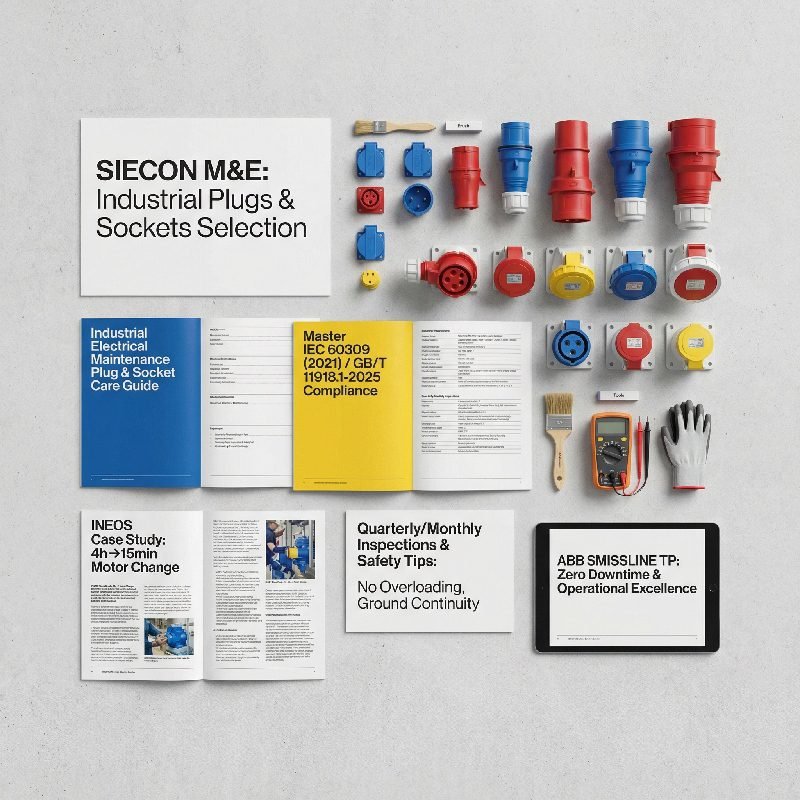
Industrial connectors face harsh conditions daily. Industrial electrical maintenance plug and socket care requires strict adherence to safety protocols. Many facilities underestimate the importance of regular connector inspections. This guide provides professional insights based on decades of field experience. We will explore termination techniques, compliance updates, and real-world case studies. Proper maintenance extends equipment life and ensures worker safety. Neglecting these components often leads to unplanned downtime. Our expertise stems from hands-on troubleshooting across various industries. Let us delve into the specifics of keeping your connections reliable.
The Critical Importance of Connector Integrity in Modern Facilities
Industrial plugs and sockets are the nervous system of your plant. They transmit power and data to critical machinery. A loose connection generates heat and wastes energy. It also stresses downstream components like variable frequency drives. Regular industrial electrical maintenance plug and socket care prevents these issues -5. Facilities must treat connectors as consumable items with finite lifespans. Environmental factors like dust and moisture accelerate wear -1. Technicians should prioritize connector health during routine rounds. This proactive approach safeguards production targets and profitability.
Understanding IEC 60309 Standards and Compliance Updates
The IEC 60309 standard governs industrial connectors worldwide. The 2021 edition introduced crucial technical revisions -2. It now includes stricter requirements for shutters and IP ratings -2. Compliance ensures interchangeability and safety across different manufacturers. China’s GB/T 11918.1-2025 aligns with these international norms -6. This standard applies to connectors up to 1000V and 800A -2. Maintenance teams must verify their inventory meets current specifications. Using outdated or non-compliant gear invites safety hazards. Understanding these rules is fundamental for any maintenance engineer.
Pre-Installation and Termination Best Practices
Proper termination is the first step in reliable connector performance. Always match the cable insulation thickness to contact spacing -1. Use a soldering iron with appropriate power for the wire gauge. Each solder joint should take no more than three seconds -1. Avoid using chemical solvents like acetone for cleaning -1. Instead, use anhydrous ethanol and a lint-free cloth. Ensure crimp tools are calibrated for the specific terminal. Inspect contacts for plating damage before assembly. These details separate professional work from frequent failures.
Comprehensive Inspection Protocols for Plugs and Sockets
Technicians must perform detailed visual and mechanical inspections. Check for bent, recessed, or protruding pins in the connector -1. Pins should not recess or protrude more than 0.5mm -1. Verify that locking mechanisms and sealing rings are intact -1. Inspect the insulator for cracks or metal debris -1. These defects compromise dielectric strength and safety. Check cable sheathing for cuts or abrasion near the strain relief. Ensure the connector shell shows no signs of cracking or corrosion. Documenting these findings helps track degradation over time -9.
Cleaning Techniques to Combat Contamination
Industrial environments bombard connectors with contaminants. Oil, dust, and moisture create conductive paths leading to failure. Regular cleaning should be scheduled based on environment severity -9. Use dry cloths for routine dust removal on exterior surfaces. For contacts, use contact cleaners that leave no residue. Avoid over-lubricating as this attracts dust -9. In chemical plants, verify cleaner compatibility with housing materials. Check密封圈 for pliability; replace them if hardened -9. Proper cleaning restores insulation resistance effectively -1.
Avoiding Overload and Ensuring Proper Grounding
Overloading is a primary cause of connector overheating and failure. Never exceed the rated current stamped on the device -5. Using multiple high-draw tools on one outlet invites disaster. Ground integrity is non-negotiable for personnel safety. Test ground continuity regularly with a micro-ohmmeter -5. Loose ground connections render safety systems useless. They also contribute to electrical noise in control systems. Ensure grounding terminals meet IEC 60309 tightening specifications -2. Proper grounding is the cornerstone of industrial electrical maintenance plug and socket care.
Case Study: Slashing Downtime at INEOS Chemical Complex
A practical example highlights the value of modern connector strategies. INEOS Battleground complex in Houston faced frequent motor failures -7. Their process required motors to run in short bursts, generating heat -7. Previously, changing a failed motor took up to four hours -7. They needed an electrician, permits, and access procedures. By switching to MELTRIC switch-rated plugs, they transformed operations -7. Operators now keep pre-wired motors with connectors ready in the control room -7.
A motor change now takes just 15 minutes -7. This industrial electrical maintenance plug and socket care innovation saved massive labor costs. The plugs also feature safety shutters and arc flash protection -7. This allows HVAC contractors to work without an electrician present -7. The watertight design meets Type 4X standards for outdoor ponds -7. This case proves that connector strategy directly impacts bottom-line profitability.
Troubleshooting Common Connector Failures
When a system malfunctions, methodical troubleshooting is essential. Always disconnect power before inspecting connectors -8. Check for pins that pull out too easily from their sockets -8. This indicates loss of contact tension and imminent failure. Measure resistance across mated pairs to identify high-impedance joints. Look for signs of arcing or discoloration on contact surfaces. Verify that the wiring diagram orientation matches the physical socket -4. Relay sockets often have mirrored pin numbering -4. For timed functions, ensure control switches are dry contact types -4. Applying voltage to these triggers can damage electronics -4.
Maintenance Schedules and Life Extension Strategies
Developing a routine is key to maximizing connector lifespan. Schedule visual inspections quarterly for general industry areas -9. In harsh environments with vibration or corrosives, inspect monthly -9. Torque check locking mechanisms to prevent loosening from vibration. For threaded couplings, use recommended torque values like 8-12 Nm for M12 -9. Verify that cables are properly supported to prevent sagging -1. Heavy cables pulling on connectors causes internal damage. Ensure bend radii start at least 30mm from the connector backshell -1. These practices extend service life dramatically.
The Role of Training in Preventing Human Error
Human error remains a leading cause of connector damage. Untrained personnel often pull on cables instead of connector bodies -1. They may also fail to align keys before engaging, bending pins. Comprehensive training should cover proper plugging and unplugging techniques -1. Staff must understand why they cannot force a connection that resists. They should recognize the signs of a failing connector. Empowering operators to report issues prevents catastrophic failures. Regular toolbox talks on connector care reinforce good habits. Investing in training pays dividends in reduced maintenance costs.
Future-Proofing with Advanced Plug and Socket Technology
Technology continues to evolve in the connector space. ABB’s SMISSLINE TP system allows hot swapping without power interruption -3. Kalmar Energi uses this to maintain switchgear without facility shutdowns -3. This technology eliminates downtime for control cabinet upgrades -3. Such innovations represent the future of industrial electrical maintenance plug and socket care. They combine safety with unprecedented flexibility. Facilities planning expansions should consider these advanced systems. They reduce total cost of ownership by simplifying future modifications.
Conclusion: Prioritizing Connector Care for Operational Excellence
Industrial plugs and sockets are small components with huge responsibilities. They demand respect and regular attention from maintenance teams. Following the guidelines in this article ensures reliable power distribution. From IEC compliance to real-world case studies, the message is clear. Proactive industrial electrical maintenance plug and socket care prevents unplanned downtime. It protects workers from arc flash and shock hazards. Implement a robust inspection program at your facility today. Your production managers will thank you for the increased uptime.