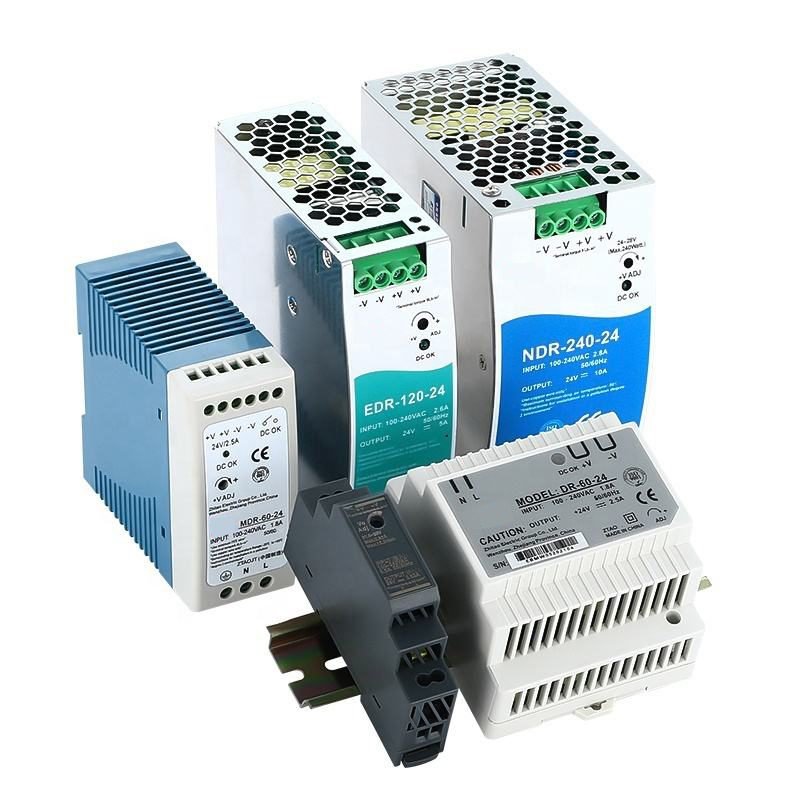
Introduction: How to Choose DIN Rail Power Supply for Industrial Systems
Learning how to choose DIN rail power supply correctly is essential for industrial automation success. This guide provides a comprehensive comparison of 24V vs 48V DIN rail power supplies and single vs dual output configurations, helping engineers select optimal power solutions for control cabinets and automation systems.
1. Advantages: Why Choose DIN Rail Power Supply Systems
Space Optimization Benefits
When you choose DIN rail power supply units, you gain significant space savings. Consequently, these compact designs maximize control cabinet efficiency through standardized 35mm rail mounting.
Installation Efficiency
DIN rail power supply installation requires minimal tools and time. Specifically, snap-on mounting systems reduce installation time by 60-80% compared to traditional methods.
Industrial Compatibility
Selecting DIN rail power supplies ensures compatibility with industrial environments. These units withstand vibration, offer optimal thermal management, and integrate seamlessly with PLCs and other control components.
2. Voltage Selection: How to Choose Between 24V vs 48V DIN Rail Power Supply
24V DIN Rail Power Supply Applications
When you choose DIN rail power supply in 24V configuration, you select the industrial standard. This voltage powers PLCs, sensors, relays, and safety systems effectively.
Best Applications for 24V:
Factory automation control panels
Sensor networks and measurement systems
Machine safety circuits
Building management systems
48V DIN Rail Power Supply Advantages
If you choose DIN rail power supply with 48V output, you optimize for specific applications. This higher voltage reduces current requirements and minimizes voltage drop over longer distances.
Best Applications for 48V:
Telecommunications equipment
Power over Ethernet (PoE++) systems
Industrial networking devices
High-power distributed systems
Decision Guide: 24V vs 48V Comparison
| Factor | Choose 24V DIN Rail | Choose 48V DIN Rail |
|---|---|---|
| Application | PLCs, sensors, relays | Telecom, PoE, networking |
| Power Level | <500W typical | >300W beneficial |
| Wiring Distance | Short to medium runs | Longer distance runs |
| Safety Priority | Higher safety margin | Requires more protection |
| System Standard | Industrial control | Telecom/data centers |
3. Output Configuration: How to Choose Single vs Dual Output
Single Output DIN Rail Power Supply Selection
When you choose DIN rail power supply with single output, you prioritize simplicity and higher current capacity. This configuration suits homogeneous voltage systems perfectly.
Advantages of Single Output:
Higher current availability per output
Simpler design with potentially higher reliability
Lower cost per watt of power
Easier system troubleshooting
Dual Output DIN Rail Power Supply Benefits
If you choose DIN rail power supply with dual outputs, you gain system flexibility. Common configurations include 12V/24V or 5V/24V combinations for mixed-voltage applications.
Advantages of Dual Output:
Space savings (one unit replaces two)
Simplified wiring with single input connection
Integrated voltage combinations
Reduced component count
Output Configuration Comparison
| Requirement | Choose Single Output | Choose Dual Output |
|---|---|---|
| Voltage Needs | Single voltage system | Multiple voltages |
| Space Available | Standard availability | Limited space |
| Current Demand | High current required | Moderate current needs |
| Budget Considerations | Lower initial cost | Higher integration value |
| System Complexity | Simple design | More complex systems |
4. Key Selection Criteria for DIN Rail Power Supply
Technical Specifications Evaluation
To properly choose DIN rail power supply units, evaluate these critical parameters:
Input Requirements:
Wide voltage range (85-264VAC) for global use
Three-phase options for high-power needs
DC input compatibility for special applications
Output Performance:
Voltage regulation (±1-2% typical)
Ripple and noise specifications
Load transient response
Protection Features:
Overvoltage protection (OVP)
Overcurrent protection (OCP)
Short circuit protection
Thermal shutdown
Environmental Considerations
When you choose DIN rail power supply for industrial use, consider:
Temperature Range:
Standard: -25°C to +70°C
Extended: -40°C to +85°C options
Certification Requirements:
Safety standards (UL 508, IEC 62368-1)
EMC compliance (EN 55032)
Industry-specific certifications
5. Installation Best Practices
Mounting Procedures
After you choose DIN rail power supply units, follow these installation steps:
Rail Preparation: Ensure proper TH35 rail mounting
Unit Positioning: Align with adequate clearance
Secure Mounting: Snap onto rail until clips engage
Connection: Tighten terminals to specified torque
Wiring Guidelines
Proper installation when you choose DIN rail power supply includes:
Input Wiring:
Correct wire gauge for current rating
Proper fuse or circuit breaker protection
Secure grounding connection
Output Wiring:
Voltage drop calculation for long runs
Proper termination techniques
Load balancing for multiple outputs
6. Application Examples
Example 1: Factory Automation
When you choose DIN rail power supply for factory automation:
Selection: 24V/20A single output
Reason: High current for multiple PLCs and sensors
Result: Reliable power for production equipment
Example 2: Telecommunications
If you choose DIN rail power supply for telecom:
Selection: 48V/10A with 24V auxiliary output
Reason: Primary 48V for equipment, 24V for control
Result: Integrated power solution
Example 3: Compact Control Panel
When space limits your DIN rail power supply choice:
Selection: 24V/12V dual output compact model
Reason: Two voltages in minimal space
Result: Optimized cabinet utilization
7. FAQ: DIN Rail Power Supply Selection
Q1: How do I start to choose DIN rail power supply?
A: Begin by determining your voltage requirements (24V or 48V), current needs, and whether you require single or multiple outputs.
Q2: What’s the main advantage when I choose DIN rail power supply?
A: The primary advantage is space-saving installation with quick mounting and easy maintenance access in industrial cabinets.
Q3: Should I choose DIN rail power supply with active PFC?
A: Choose units with active PFC for higher efficiency (>0.95 power factor) and better compliance with harmonic standards.
Q4: How many units can I fit when I choose DIN rail power supply?
A: Typically 10-20 units per meter of rail, depending on individual unit width and required clearances.
Q5: What certifications should I check when I choose DIN rail power supply?
A: Verify UL/CE markings, IEC safety standards, and any industry-specific certifications for your application.
Conclusion: Optimal DIN Rail Power Supply Selection
Learning how to choose DIN rail power supply systems effectively requires understanding your specific application needs. By comparing 24V vs 48V options and evaluating single vs dual output configurations, you can select the optimal power solution for your industrial system.
Quick Selection Summary:
For standard control → Choose 24V single output DIN rail
For telecom/PoE → Choose 48V DIN rail power supply
For mixed voltages → Choose dual output configuration
For tight spaces → Choose compact DIN rail units
For harsh environments → Choose industrial-grade models
Final Recommendation: Always choose DIN rail power supply units from reputable manufacturers with proper certifications and technical support for your specific industrial application requirements.
Need Assistance? Contact our technical team for personalized guidance on how to choose DIN rail power supply solutions tailored to your specific industrial automation needs.