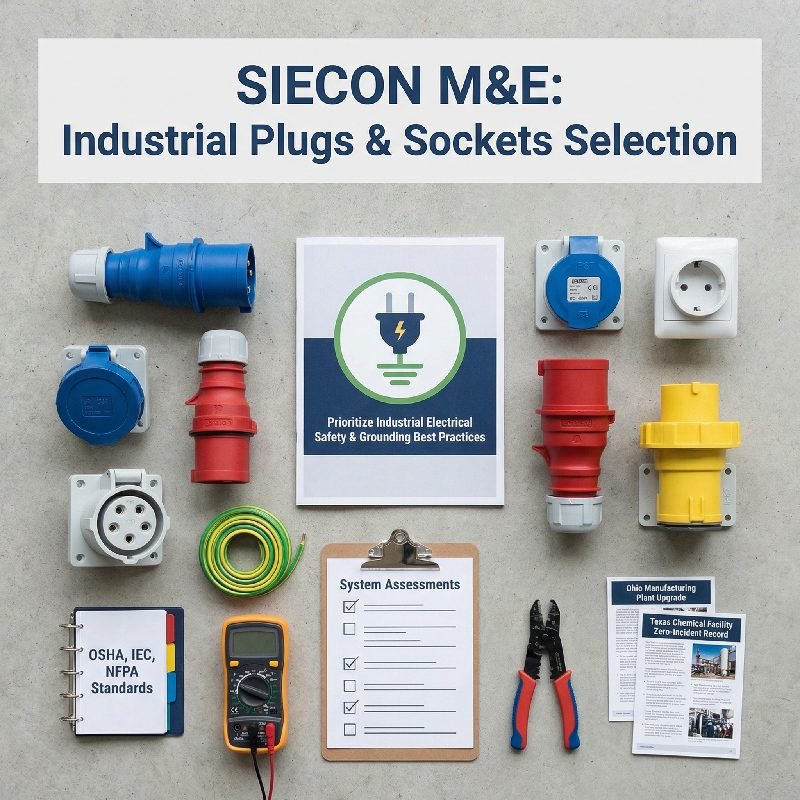
Introduction: The Critical Role of Industrial Electrical Grounding
Industrial electrical grounding is critical for workplace safety. It acts as a vital safety net, redirecting fault currents away from workers and equipment to prevent dangerous incidents. Proper grounding effectively stops electrical shocks and fires, so every industrial facility must prioritize it daily. Without it, accident and downtime risks rise sharply. This article breaks down actionable guidelines, with real case studies to illustrate key principles aligned with global safety standards. Readers gain expert insights from industry experience to implement robust systems. Let’s explore the core purpose of industrial electrical grounding to build a strong safety foundation.
Core Purpose: Protecting People and Assets Through Grounding
The primary goal of grounding is protecting people and assets, serving as a critical defense against electrical hazards. It provides a low-resistance path for fault currents to earth, designed to handle high currents safely and avoid dangerous voltage buildup on equipment. Without this path, workers may touch energized surfaces accidentally—even low-voltage systems pose injury or fatality risks. Grounding stabilizes voltage, reducing operational disruptions and equipment damage from common industrial power surges. It also supports OSHA and IEC compliance, with every system component working together for optimal safety. Understanding this purpose guides all grounding decisions and actions.
Best Practice 1: Conduct Regular Grounding System Assessments
First, conduct comprehensive grounding system assessments regularly—key to proactive safety management. Assessments identify flaws early, preventing small issues from escalating. They detect corrosion (common in harsh environments), loose connections, or inadequate conductors. A thorough assessment includes visual checks (spotting rust, loose wires) and electrical testing with tools like earth resistance testers for precise readings. Ideal resistance varies by application, with most facilities needing below 5 ohms (lower for high-risk sites). Regular assessments align with evolving regulations and maintain a reliable, compliant grounding system for long-term safety.
Best Practice 2: Select Suitable Grounding Conductor Materials
Second, select the right grounding conductor materials for the environment—directly impacting durability. Copper is the top choice for industrial use, offering superior conductivity and corrosion resistance (vital for outdoor/damp areas) and long-term reliability. Aluminum is an alternative but needs anti-oxidant compounds to avoid oxidation issues. Conductor size must match the system’s fault current capacity, determined by maximum potential fault current. Undersized conductors fail during faults, overheating and increasing fire risk. Harsh environments (chemical plants, coasts) need specialized materials to ensure reliability, extend lifespan, and cut maintenance costs.
Best Practice 3: Ensure Proper Installation of Grounding Components
Third, ensure proper installation of grounding electrodes and connections—quality equals material importance. Electrodes (ground rods, plates, concrete-encased) are the system’s foundation, connecting to earth. Rods suit general use, plates work for high soil resistivity, each serving specific needs. Connections must be tight and corrosion-free; loose ones increase resistance, reducing fault redirection ability. Use hardware like compression lugs for a tight bond, following manufacturer guidelines for electrode depth (varying by soil type/moisture). Improper installation negates quality materials, so every step must follow industry best practices and standards for safety.
Best Practice 4: Implement Regular Maintenance and Testing Protocols
Fourth, implement regular maintenance and testing protocols to keep the system effective. Maintenance includes cleaning connection points (removing dirt/corrosion) and inspecting for wear. Testing (by certified professionals) measures ground resistance and conductor integrity. Most facilities need twice-yearly checks (quarterly/monthly for high-risk sites like chemical plants). Document all results for audits—logs track performance, identify improvements, and prove compliance. Neglect causes gradual degradation and sudden failures. Consistent maintenance ensures the system works when needed, protecting workers and assets with peace of mind.
Case Study 1: Manufacturing Plant Grounding Upgrade Success
A mid-sized Ohio automotive plant faced daily electrical faults in 2023, with workers reporting mild shocks—signaling a major grounding failure. The system hadn’t been assessed in five years, leading to 30% corroded copper conductors and 12-ohm resistance (well above the 5-ohm standard). The plant acted quickly, replacing corroded conductors with properly sized copper, reinstalling electrodes 8 feet deep, and establishing bi-annual maintenance/testing. Within three months, faults ceased, safety risks dropped, and compliance was achieved. The plant passed its next OSHA inspection, proving proactive grounding practices prevent accidents and downtime.
Case Study 2: Chemical Facility Grounding Improvements for Continuity
A Texas chemical facility (handling flammable materials) had a 2022 electrical fire near a solvent tank, causing a two-day shutdown and $200k in lost revenue. Investigation found undersized, oxidized aluminum conductors. The facility upgraded to corrosion-resistant copper conductors and concrete-encased electrodes (better for dry soil), trained staff for monthly visual checks, and added a real-time ground resistance monitoring system. Since then, there have been zero grounding-related incidents, 100% less electrical downtime, and over two years of continuous operations—protecting safety and profitability.
Compliance with Global Electrical Safety Standards
Compliance with global safety standards is key to grounding practices, ensuring minimum safety requirements. OSHA’s 29 CFR 1910.304 applies to U.S. workplaces, specifying equipment/circuit grounding. IEC 60364 (used in 100+ countries) offers uniform international guidelines. NFPA 70 (NEC) updates every three years for new technologies. Non-compliance risks fines (tens of thousands for serious violations) and endangers workers/operations. Regular third-party audits ensure compliance; certified professionals navigate standard nuances. Aligning with standards provides a safety framework—compliance is a legal obligation and safety imperative.
Common Mistakes to Avoid in Industrial Electrical Grounding
Avoiding common grounding mistakes is critical for system effectiveness. Using undersized/inappropriate conductors is a major error—they fail during faults, endangering lives. Neglecting regular testing/maintenance lets small issues become dangerous. Improperly installed electrodes don’t provide adequate fault paths, wasting quality materials. Overlooking corrosion in harsh environments weakens conductors and increases resistance. Assuming old systems work leads to preventable risks—degradation is slow but can cause