Introduction: A Crisis That No One Saw Coming
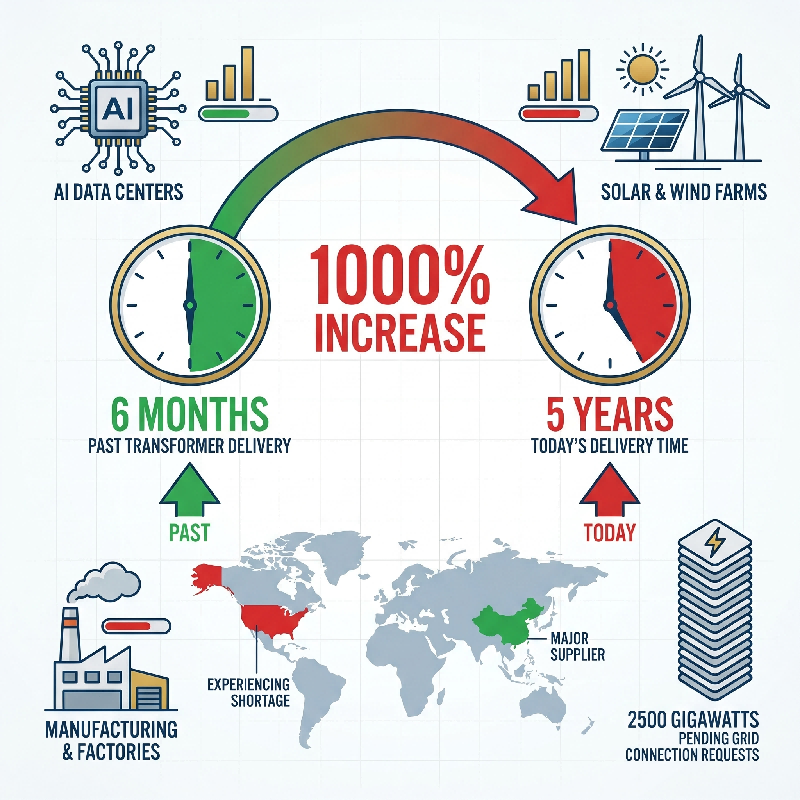
Just a few years ago, transformers were easy to buy. Standard lead times were only six to eight weeks. Today, the same transformer takes five years to arrive. This change has shocked project developers everywhere. Solar farms, data centers, and factories are all affected. The global transformer shortage is now a major crisis. Let me explain exactly how this happened. I will also tell you what it means for switchgear suppliers. The situation is serious but opportunities exist for smart companies.
The Numbers That Tell the Real Story
Transformer lead times have increased by over 1000 percent. A product that took 2 months now takes 60 months. The global backlog of grid connection requests is huge. About 2500 gigawatts of projects are waiting in line. That is twice the entire US electricity generation capacity. US transformer imports from China grew by 182 percent. Domestic US production covers only twenty percent of demand. The shortage affects every voltage level and size. Small distribution transformers are just as hard to get. Large power transformers for data centers are even worse.
Why Did This Happen So Quickly
Three major trends collided at exactly the same time. First, AI data centers started consuming massive amounts of power. Each large facility needs hundreds of transformers. Second, governments accelerated renewable energy construction worldwide. Solar and wind farms all need grid connection transformers. Third, the existing transformer fleet is aging rapidly. Many units installed in the 1970s need replacement now. Transformer factories had already closed during years of low demand. The remaining factories cannot keep up with this sudden surge. Simple math explains the entire crisis.
Real Case: A Solar Farm Delayed by Two Years
I advised a solar farm developer in Texas last quarter. Their project was ready to generate power immediately. The only missing piece was a large step-up transformer. Their usual US supplier quoted a fifty two month delivery. The developer could not wait that long for completion. They asked me to find an alternative source worldwide. I found a certified Chinese manufacturer with faster delivery. The transformer arrived in six months instead of fifty two. The solar farm is now operating and generating revenue. Without that Chinese supplier, the project would be dead.
The Supply Chain Reality Behind Transformer Manufacturing
Transformers require specialty materials that are hard to source. Electrical steel is the most critical component by far. China produces over sixty percent of the world‘s electrical steel. The US has very limited electrical steel production capacity. Copper windings also face supply constraints globally. Large transformer factories take years to build from scratch. Skilled workers take even longer to train properly. The US closed most of its transformer factories long ago. Rebuilding that industrial base will take a decade minimum. This is not a problem that can be solved quickly.
What This Shortage Means for Switchgear Suppliers
Transformers and switchgear are always purchased together as a set. A transformer cannot operate safely without switchgear protection. When buyers search for transformers, they also need switchgear. This creates a bundled demand for complete electrical rooms. Chinese switchgear suppliers are seeing increased inquiries from US buyers. The quality and certification levels now meet international standards. Delivery times from China are still measured in weeks, not years. Smart switchgear suppliers should partner with transformer manufacturers. Offering complete solutions will win more business now.
Which Industries Are Being Hit the Hardest
AI data centers are the most visible victims of this shortage. Their growth plans depend entirely on transformer availability. Renewable energy projects are also facing major delays. Wind and solar farms cannot connect to the grid without transformers. Manufacturing facilities expanding production face the same problem. A new factory needs transformers to operate any equipment. Utility grid upgrade projects are stalled across many regions. Even residential construction is affected in some areas. The shortage touches every part of the economy now.
How Long Will This Shortage Last
Most experts expect the shortage to continue for years. New transformer factories take at least three years to build. Training skilled workers adds another two years to that timeline. The current backlog of orders will take years to clear. AI data center construction shows no sign of slowing down. Renewable energy targets are becoming more aggressive worldwide. The old transformer fleet continues to age every single day. I expect tight supply to last until at least 2030. Buyers should plan for long lead times well into the future.
What Smart Buyers Should Do Right Now
First, stop assuming you can get transformers quickly anymore. Second, place orders at least eighteen months before you need delivery. Third, consider multiple suppliers across different countries for safety. Fourth, look for certified Chinese manufacturers with available capacity. Fifth, order switchgear at the same time as your transformers. Sixth, consider stocking critical spare transformers for your facility. Seventh, work with a supply chain consultant who knows the market. Eighth, be ready to pay higher prices than you did before. These steps will help you navigate this difficult market successfully.
Conclusion: A Crisis That Creates New Opportunities
Transformer lead times will not return to normal soon. The shortage is structural and will last for years. However, this crisis creates real opportunities for prepared suppliers. Chinese transformer and switchgear manufacturers are filling the gap. US buyers are actively seeking new, reliable sources now. The companies that respond quickly will capture significant market share. Do not wait for lead times to come back down. They will not. Start your sourcing strategy today.