
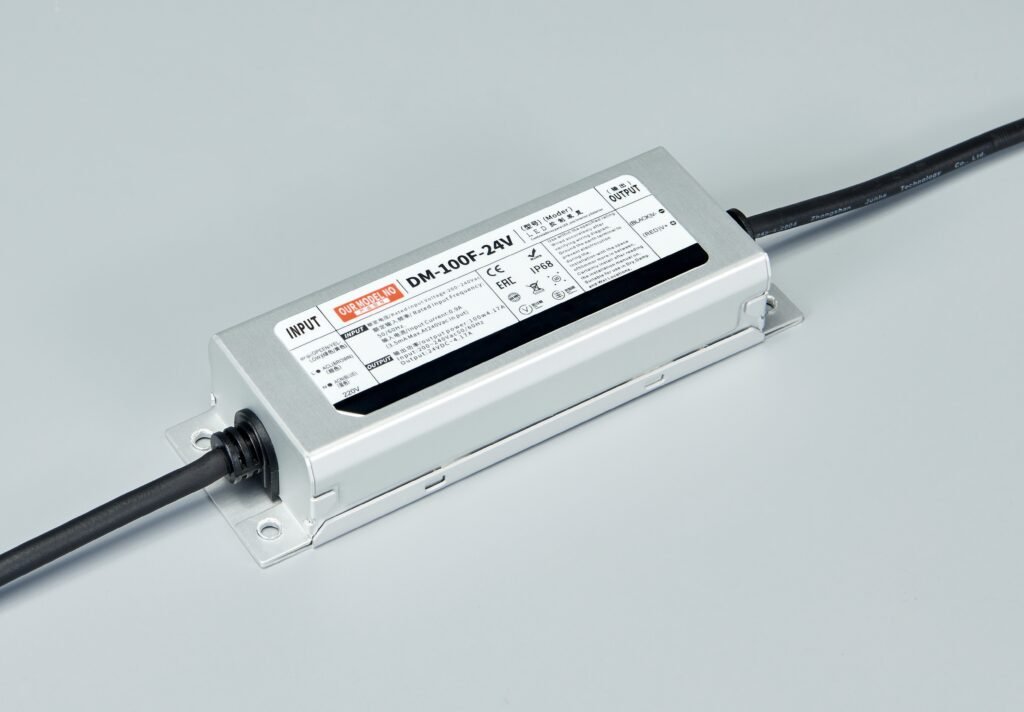
Introduction: Voltage Selection for Lighting Projects
Choosing between LED power supply 24V vs 12V significantly impacts lighting project success across commercial, residential, and landscape applications. Consequently, this comprehensive guide provides voltage comparison, efficiency analysis, and specific recommendations for different lighting scenarios with practical implementation advice.
1. Technical Comparison: 24V vs 12V Systems
Electrical Performance Analysis
Voltage Drop Considerations fundamentally differ between systems. For instance, 24V systems experience only 25% of the voltage drop of equivalent 12V systems for identical power and distance, making them superior for longer cable runs.
Current Requirements Comparison:
| Power Level | 12V System Current | 24V System Current | Advantage |
|---|---|---|---|
| 50W | 4.17A | 2.08A | 24V: 50% less current |
| 100W | 8.33A | 4.17A | 24V: 50% less current |
| 150W | 12.5A | 6.25A | 24V: 50% less current |
| 200W | 16.67A | 8.33A | 24V: 50% less current |
Efficiency Factors reveal important differences. Specifically, 24V systems reduce copper losses by 75% compared to 12V alternatives. Additionally, both voltages achieve 85-95% efficiency in modern power supplies, though 24V typically offers 2-5% better overall system efficiency. Moreover, 24V generates less heat in wiring, improving thermal performance.
Safety and Installation Considerations
Safety Standards apply to both voltage options. However, while both voltages are classified as SELV (Safety Extra-Low Voltage), 12V systems offer additional safety margins for direct contact applications. Conversely, 24V installations still operate within safe touch voltage limits but require careful implementation.
Installation Differences include wiring requirements. Specifically, 12V systems require larger conductors due to higher current flow. Similarly, both systems need proper termination techniques and circuit protection. Furthermore, standard voltage verification procedures apply to both installations.
2. Commercial Lighting Applications
Office Lighting Systems
Project Requirements typically include recessed LED panels or linear fixtures with power ranges from 50-200W per circuit. Additionally, cable distances often span 20-100 meters in office layouts, while control integration might involve DALI, 0-10V, or DMX compatibility. Moreover, these systems generally operate 10-14 hours daily.
Recommended Solution: 24V LED Power Supply
Technical Justification centers on several factors. Primarily, commercial operations value energy savings, making efficiency a priority. Secondly, office layouts often require distributed lighting with longer cable runs. Thirdly, reduced heat generation in plenum spaces improves thermal management. Finally, 24V systems accommodate future expansions more effectively.
Implementation Example typically involves selecting products like Siecon S-LED 24V/8A Constant Voltage Drivers. These units feature 92% efficiency, DALI-2 dimming compatibility, and IP20 ratings. Subsequently, installation usually involves centralized placement in electrical closets with distributed wiring. Furthermore, energy metering capabilities support sustainability reporting.
Cost-Benefit Analysis demonstrates clear advantages:
| Metric | 12V System | 24V System | Advantage |
|---|---|---|---|
| Initial Wire Cost | $2,500 | $1,800 | 24V saves 28% |
| Annual Energy Cost | $3,150 | $2,985 | 24V saves 5% |
| 5-Year Maintenance | $1,200 | $900 | 24V saves 25% |
| Total 5-Year Cost | $18,850 | $16,785 | 24V saves 11% |
Retail and Showroom Lighting
Project Characteristics often involve track lighting, display lighting, and accent fixtures with higher power density for visual emphasis. Additionally, these installations frequently require layout flexibility, high CRI requirements (90+), and smooth, flicker-free dimming capabilities.
Recommended Solution: 24V with Enhanced Features
Technical Considerations include voltage stability for consistent color rendering, modular design for changing layouts, advanced control integration, and extended operational reliability. Consequently, 24V systems better meet these demanding requirements.
Implementation Strategy typically employs 24V constant voltage drivers with 0-10V dimming. Moreover, zoned power distribution with individual control enhances flexibility, while surge protection safeguards sensitive LED fixtures. Additionally, load monitoring supports preventive maintenance.
Performance Metrics should achieve ±1% voltage regulation for color consistency, 1-100% smooth dimming operation, >93% efficiency for cost control, and 50,000+ hours operational lifespan.
3. Residential Lighting Applications
General Home Lighting
Project Requirements usually involve downlights, strip lights, and pendant fixtures with 20-100W typical power per circuit. Furthermore, cable distances typically range 5-30 meters in residential wiring, while control methods include wall dimmers and smart home integration. Most importantly, maximum safety remains paramount for household use.
Recommended Solution: 12V LED Power Supply
Technical Justification emphasizes several residential priorities. First, additional safety margins benefit home environments. Second, shorter cable runs characterize most residential installations. Third, competitive pricing addresses homeowner budget considerations. Fourth, DIY compatibility simplifies homeowner installations.
Implementation Example often selects products like Siecon Home Series 12V/5A Drivers. These units feature TRIAC dimmability, compact designs, and silent operation. Subsequently, installation typically localizes near fixture clusters, while integration ensures compatibility with standard residential dimmers.
Residential Considerations extend beyond technical specifications. Specifically, aesthetics demand small, unobtrusive designs, while silent operation suits living spaces. Moreover, extended warranties build homeowner confidence, and clear documentation assists non-technical users.
Kitchen and Bathroom Lighting
Specific Requirements include moisture resistance (IP44 or higher for bathrooms), high output for task lighting, tunable white options, and longevity despite frequent switching.
Recommended Approach: Mixed Voltage Strategy
Implementation Plan addresses varying needs strategically. Initially, general lighting might utilize 12V for safety and cost efficiency. Meanwhile, task lighting could employ 24V for better performance in longer runs. Additionally, special features may require voltage-specific solutions. Finally, unified control systems integrate all components despite different voltages.
Product Recommendations vary by application. For example, under-cabinet lighting might use 12V strip lighting with diffusers. Conversely, vanity lighting could employ 24V for consistent brightness in longer runs. Similarly, accent lighting matches voltage to specific fixture requirements. Ultimately, unified smart controllers manage all voltages seamlessly.
4. Landscape and Outdoor Lighting
Garden and Pathway Lighting
Project Requirements account for outdoor exposure and temperature variations, cable distances of 50-200 meters for large properties, multiple zones with individual control, IP67 minimum weather resistance, and buried or aerial distribution methods.
Recommended Solution: 24V LED Power Supply
Technical Justification focuses on critical outdoor factors. Primarily, voltage drop management becomes essential for long cable runs. Secondly, efficiency optimization reduces energy loss in distribution. Thirdly, safety compliance demands proper outdoor installation practices. Finally, reliability requires weather-resistant construction.
Implementation Example selects products like Siecon Outdoor Series 24V/10A IP67 drivers. These units feature waterproof construction, wide temperature ranges (-40°C to +60°C), and integrated surge protection. Subsequently, installation employs centralized weatherproof enclosures with proper zoning strategies.
Landscape Specific Considerations include separate circuits for different garden areas, astronomical clock controls for seasonal adjustment, proper shielding to minimize light pollution, and easy maintenance access for service and adjustments.
Architectural and Facade Lighting
Project Characteristics involve large building surfaces with multi-story installations, high power density for visual impact, complex dynamic lighting scenes, challenging height access during installation, and demanding long-term performance requirements in harsh conditions.
Recommended Solution: 24V Professional Grade
Technical Implementation requires several coordinated approaches. First, centralized 24V distribution panels manage power distribution. Second, active voltage regulation ensures consistent performance. Third, professional lighting control systems enable complex scenes. Fourth, remote monitoring systems provide diagnostics and management.
Product Specifications should exceed 94% efficiency for large installation economics, include comprehensive electrical and environmental protection, comply with international standards for public installations, and feature modular designs for project phasing.
Performance Requirements demand ±2% voltage stability across entire installations, smooth flicker-free dimming operation, minimal color variation between fixtures, and 50,000+ hours reliability with maintenance planning.
5. Case Studies and Real-World Examples
Case Study 1: Office Building Retrofit
Project Overview involved a 10-story commercial building with inefficient fluorescent lighting. Project goals targeted 50% energy reduction and improved lighting quality within a medium budget achieving 3-year ROI.
Voltage Selection Process followed systematic evaluation. Initially, existing infrastructure assessment evaluated conduit and wiring conditions. Subsequently, lighting layout analysis examined circuit lengths and power requirements. Then, energy modeling compared 24V vs 12V efficiency. Finally, cost analysis evaluated total project economics.
Selected Solution: 24V Distributed System
Implementation Results achieved significant improvements. Specifically, energy savings reached 58% reduction from the previous system. Additionally, installation costs finished 15% under budget. Moreover, performance exceeded lighting quality specifications. Furthermore, maintenance requirements reduced service calls by 40%.
Case Study 2: Luxury Residential Development
Project Overview encompassed 50 luxury condominium units with architectural, task, ambient, and decorative lighting integrated with whole-home automation systems meeting high-end finish expectations.
Voltage Strategy: Hybrid Approach
Implementation Plan combined different solutions strategically. First, general lighting utilized 12V for safety and cost efficiency. Second, architectural features employed 24V for long runs and consistency. Third, smart integration unified control platforms. Fourth, future proofing incorporated infrastructure for technology upgrades.
Performance Outcomes delivered excellent results. Primarily, homeowner satisfaction reached 95% positive feedback. Secondly, system reliability achieved zero failures in the first year. Thirdly, energy efficiency exceeded building code by 40%. Finally, flexibility enabled easy customization for individual units.
Case Study 3: Municipal Park Lighting
Project Overview covered 50-acre urban parks with pathway, feature, security, and sports lighting zones targeting LEED certification while meeting community safety, aesthetic, and efficiency requirements.
Selected Solution: 24V Centralized with Solar Assist
Technical Implementation combined multiple approaches. The main power system used grid-connected 24V distribution, while solar supplementation served hybrid systems for remote areas. Additionally, zoned control with motion sensing optimized operations, and remote management enabled monitoring and reporting.
Project Results achieved multiple benefits. Energy consumption reduced 65% from conventional designs, while community response indicated enhanced safety perception. Moreover, maintenance costs ran 30% lower than projected, and sustainable design recognition earned awards.
6. Selection Methodology and Decision Framework
Step-by-Step Selection Process
Phase 1: Project Analysis examines several factors. Initially, site assessment evaluates physical layout and constraints. Subsequently, lighting design review analyzes fixture types and placement. Then, power requirements calculation determines total load and distribution. Finally, control system planning addresses dimming and automation needs.
Phase 2: Technical Evaluation involves detailed calculations. First, voltage drop calculations assess each circuit. Second, efficiency analysis examines energy cost implications. Third, safety assessment considers installation environment. Fourth, reliability requirements evaluate operational criticality.
Phase 3: Economic Analysis compares financial aspects. Primarily, initial cost comparison evaluates equipment and installation expenses. Secondly, operating cost projection estimates energy and maintenance. Thirdly, lifecycle cost calculation determines 5-10 year totals. Fourthly, ROI analysis computes payback periods.
Phase 4: Implementation Planning coordinates execution details. Initially, product selection specifies model requirements. Subsequently, installation methodology establishes best practices. Then, testing protocol verifies performance. Finally, documentation requirements prepare operational manuals.
Decision Matrix Template
Project Scoring System:
| Criteria | 12V Score (1-10) | 24V Score (1-10) | Weight Factor |
|---|---|---|---|
| Cable Length | 20% | ||
| Safety Requirements | 25% | ||
| Energy Efficiency | 15% | ||
| Initial Cost | 20% | ||
| Future Expansion | 10% | ||
| Control Integration | 10% | ||
| Total Score | 100% |
Decision Thresholds guide final selections. Specifically, 12V Recommended when score difference exceeds 2.0 points. Conversely, 24V Recommended when score difference falls below -2.0 points. Alternatively, Hybrid Solution suits score differences within ±2.0 points. However, Consult Specialist becomes necessary for inconclusive or critical applications.
7. Product Recommendations by Application
Commercial Grade Products
24V Professional Series includes Siecon Pro-24 Series ranging from 24V/5A to 24V/20A. These units feature 94% efficiency, DALI-2 compatibility, and monitoring outputs suitable for offices, retail, schools, and healthcare facilities with 5-year comprehensive warranties.
12V Commercial Options encompass Siecon Com-12 Series from 12V/8A to 12V/16A. These drivers offer high power factor and silent operation ideal for restaurants, hotels, and boutiques, including emergency lighting compatibility.
Residential Products
12V Home Series features Siecon HomeSafe Series from 12V/3A to 12V/10A. These TRIAC dimmable drivers boast compact designs suitable for living spaces, bedrooms, and hallways with double insulation and child-safe construction.
24V Residential Special includes Siecon Arch-24 Series from 24V/4A to 24V/8A. These architectural grade units offer slim profiles for kitchen task lighting and media rooms with smart home system compatibility.
Landscape Products
24V Outdoor Series comprises Siecon Terra Series from 24V/6A to 24V/15A IP67. These fully waterproof drivers feature wide temperature ranges for gardens, pathways, and water features with UV-resistant, corrosion-protected construction.
Professional Landscape products include Siecon Landscape Pro from 24V/10A to 24V/30A. These multiple-output units offer surge protection for large estates and commercial landscapes with 0-10V, DALI, and DMX control options.
8. Installation Best Practices
Commercial Installation Standards
Electrical Requirements mandate several protocols. First, circuit protection requires proper overcurrent devices. Second, equipment grounding conductors ensure safety. Third, low voltage versus line voltage separation prevents interference. Fourth, clear circuit identification aids maintenance.
Mechanical Installation demands specific approaches. Secure, vibration-resistant mounting ensures longevity, while adequate airflow maintains cooling. Moreover, service and maintenance access facilitates operations, and physical damage prevention protects investments.
Residential Installation Guidelines
Safety First Approach prioritizes several measures. GFCI protection follows code requirements where applicable, while proper enclosure sizing accommodates box fill calculations. Additionally, neat and organized wire management improves reliability, and comprehensive pre-energization testing prevents issues.
Aesthetic Considerations influence installation decisions. Hidden installation conceals components where possible, while vibration damping reduces noise if needed. Furthermore, proper heat dissipation manages thermal issues, and professional appearance maintains finish quality.
Landscape Installation Procedures
Environmental Protection requires specific strategies. Proper IP rating implementation ensures waterproofing, while sunlight-resistant materials combat UV exposure. Moreover, component selection accommodates temperature extremes, and corrosion protection suits local conditions.
Installation Quality depends on several factors. Proper depth and protection secure cable burial, while waterproof connectors maintain connections. Additionally, effective earth grounding ensures safety, and comprehensive post-installation testing verifies performance.
9. Maintenance and Troubleshooting
Preventive Maintenance Schedule
Commercial Facilities require regular attention. Monthly visual inspections and temperature checks catch early issues, while quarterly connection tightness verification prevents failures. Additionally, annual complete performance testing ensures standards, and 5-year preventive replacement considers lifecycle management.
Residential Properties need periodic evaluation. General inspections every 6 months monitor conditions, while yearly performance verification maintains quality. Moreover, responsive issue addressing prevents escalation, and 5-7 year system evaluation plans upgrades.
Landscape Installations demand seasonal care. Post-winter and summer checks address weather impacts, while monthly monitoring during initial operation establishes baselines. Furthermore, annual comprehensive system reviews assess overall health, and post-storm event inspections identify damage.
Common Issues and Solutions
Voltage Drop Problems manifest through specific symptoms. Dimming at circuit ends and color shifts indicate issues, typically caused by undersized wiring or excessive distance. Solutions involve increasing wire gauge or adding power injection, while prevention requires proper design calculations.
Overheating Issues display recognizable signs. Thermal shutdowns and reduced output signal problems, often stemming from poor ventilation, overload, or high ambient temperatures. Solutions include improving airflow, reducing load, or relocating units, while prevention employs proper derating and installation.
Control System Problems reveal themselves through operation issues. Flickering and inconsistent dimming suggest compatibility or wiring problems. Solutions require verifying compatibility and checking connections, while prevention involves system testing before installation.
10. Future Trends and Developments
Technology Advancements
Higher Efficiency Standards target 95%+ efficiency becoming standard by 2025-2027. This improvement delivers further energy cost reductions through wide bandgap semiconductor implementation.
Smart Integration incorporates several innovations. Cloud monitoring and control enable IoT connectivity, while AI-driven failure prediction supports predictive maintenance. Additionally, automated optimization enhances energy management, already available in premium products.
Material Innovations advance multiple aspects. Advanced cooling materials improve thermal management, while higher power density designs enable miniaturization. Moreover, recyclable and eco-friendly materials support sustainability, and longer lifespan components enhance durability.
Application Evolution
Human-Centric Lighting supports well-being through several approaches. Tunable white systems regulate circadian rhythms, while improved lighting design enhances health benefits. However, precise voltage control becomes necessary for implementation, increasingly standard in premium installations.
Solar Integration expands through several developments. Complete solar lighting systems enable off-grid capability, while grid-tied systems with solar assist create hybrid solutions. Furthermore, improved storage solutions advance battery technology, and increasing affordability reduces costs.
Wireless Power represents emerging technology with specific characteristics. Resonant wireless power serves difficult wiring locations, though currently limited by range and power constraints. Nevertheless, future applications show potential for specific implementations.
Conclusion: Optimal Voltage Selection Strategy
LED power supply 24V vs 12V selection requires careful consideration of project requirements, technical parameters, and economic factors. Therefore, each voltage offers distinct advantages for different applications, making context-specific selection essential for optimal results.
Final Recommendations Summary:
Commercial Lighting primarily chooses 24V systems for efficiency, voltage drop management, and professional features. However, small spaces with short cable runs may utilize 12V alternatives.
Residential Lighting generally selects 12V systems for safety, cost effectiveness, and compatibility with residential practices. Nevertheless, large homes or specific architectural features might benefit from 24V implementations.
Landscape Lighting predominantly employs 24V systems for long cable runs, environmental durability, and efficiency. Conversely, very small garden areas with minimal cable runs could use 12V solutions.
Implementation Principles:
Design First: Complete lighting design before voltage selection
Calculate Thoroughly: Perform detailed voltage drop calculations
Consider Totals: Evaluate total cost of ownership, not just initial cost
Plan for Future: Consider expansion and technology upgrades
Verify Compatibility: Ensure all components work together seamlessly
Success Factors:
Professional Design: Engage qualified lighting designers
Quality Products: Select reliable, certified products
Proper Installation: Follow manufacturer specifications and codes
Adequate Testing: Comprehensive commissioning and testing
Ongoing Maintenance: Regular maintenance for optimal performance
Professional Support: Contact lighting specialists for project-specific LED power supply 24V vs 12V recommendations. Expert analysis considers all project variables to ensure optimal system performance, reliability, and value throughout the installation lifecycle.